When considering a metal carport, garage, barn, RV cover, or any custom steel building for your property, one crucial but often overlooked aspect is wind engineering. It’s not just about how the structure looks; it’s fundamentally about its ability to withstand the forces of nature, especially wind. Understanding wind engineering ensures your investment is not only functional and aesthetically pleasing but also safe, durable, and compliant with local building regulations.
This guide dives deep into why wind engineering is paramount for steel buildings, offering practical insights for homeowners, ranch owners, business owners, and property owners alike. We’ll cover what it entails, why it’s critical for various structures, and how to ensure your chosen building is properly engineered for your location.
Wind isn’t just a gentle breeze; it’s a dynamic force that exerts pressure and suction on structures. For the untrained eye, this might seem abstract, but for engineers, it’s a calculated risk that must be mitigated.
What Exactly is a Wind Load?
A wind load is the force exerted by wind on a building or structure. It’s not a constant figure; it varies based on several factors like wind speed, wind direction, the shape and height of the building, and the surrounding terrain.
- Pressure: When wind hits a surface directly, it creates positive pressure. Think of a sail catching the wind.
- Suction (or Uplift): On other surfaces, especially the roof and leeward (downwind) sides, wind can create negative pressure, effectively pulling the structure apart. This uplift can be more damaging than direct pressure.
- Turbulence: Natural wind isn’t smooth. It’s full of eddies and gusts that create fluctuating pressures, putting dynamic stress on the building materials and connections.
Why Older Designs Might Not Cut It Anymore
Many readily available “off-the-shelf” metal building kits are designed to meet minimum code requirements. However, building codes are updated periodically to reflect a better understanding of wind behavior and its impact. Furthermore, some manufacturers may not engage in extensive site-specific wind engineering, relying on generalized regional data. This can leave your structure vulnerable in areas prone to severe weather.
The Role of Terrain and Surrounding Structures
The immediate environment around your steel building significantly influences wind forces.
- Open Terrain: Is your property in a wide-open field? Expect higher, less obstructed wind speeds.
- Urban/Suburban Areas: Buildings and trees can create wind shadows, reducing direct wind impact in some areas, but they can also channel wind into destructive gusts.
- Coastal Regions: These areas often experience higher wind speeds and more frequent storms, requiring specialized engineering.
Understanding the significance of wind engineering in the design and construction of steel buildings is crucial for ensuring their durability and safety. A related article that explores the practical applications of wind-resistant structures can be found at this link, which discusses the benefits of vertical roof metal carports in areas prone to high winds. This resource highlights how proper engineering can enhance the resilience of metal buildings against harsh weather conditions, making it an essential read for those interested in the intersection of wind engineering and steel construction.
Engineering for Safety: Certification, Codes, and Compliance
When you invest in a steel building, you’re investing in its longevity and safety. This is where proper engineering, certification, and adherence to building codes become paramount.
What Does Building Certification Mean for Steel Buildings?
Certification signifies that a steel building’s design has been reviewed and approved by a qualified engineer, meeting specific building codes and standards. This is not just a formality; it’s a guarantee of structural integrity.
- Engineer Sealed Plans: Professional engineers stamp and seal their plans, indicating they have personally reviewed and approved the design. This is your assurance of competent engineering.
- Compliance with Standards: Certified buildings meet recognized industry standards, such as those from the American Society of Civil Engineers (ASCE).
Navigating Local Building Codes: A Non-Negotiable Step
Building codes are the backbone of safe construction. They are established by local authorities and are designed to protect public safety and property.
- Wind Design Speed: Codes specify the maximum expected wind speed for a given region, often based on historical data and projections. This is a fundamental input for wind engineering.
- Snow Load: While this article focuses on wind, it’s crucial to remember that snow load is another significant engineering consideration, particularly in colder climates. Your building must be designed to handle the weight of accumulated snow.
- Seismic Zones: In earthquake-prone areas, buildings must also be engineered to withstand seismic forces.
- Permitting and Inspections: Most local authorities require permits for construction and will conduct inspections to ensure the building is erected according to approved plans and codes. Failing to comply can lead to fines, demolition orders, and insurance denial.
The Importance of Wind Speed and Exposure Categories
The primary driver for wind engineering is the design wind speed specified by local building codes for your exact location. This isn’t a general regional number; it’s often site-specific.
- Basic Wind Speed: This is the initial wind speed established by codes, typically a 3-second gust expected to occur once in a 50-year period.
- Exposure Categories: This is where practical application meets engineering. Codes define different exposure categories (e.g., Exposure B, C, D) that account for the surrounding terrain and its effect on wind speed.
- Exposure B: Urban and suburban areas, with buildings, trees, or other obstructions that break up the wind flow.
- Exposure C: Open country, grasslands, or wooded areas.
- Exposure D: Flat, unobstructed areas and coastal regions.
Your building’s exposure category dictates how the basic wind speed is adjusted for your specific site. A building in Exposure D will experience significantly higher effective wind forces than one in Exposure B, even if the basic wind speed is the same.
Sizing and Design: Tailoring Wind Engineering to Your Needs
The sheer size and form of your steel building play a critical role in how wind forces affect it. Proper sizing and design are directly linked to robust wind engineering.
How Building Size Impacts Wind Forces
Larger structures present a bigger surface area for wind to act upon.
- Surface Area: A wider or taller building will naturally experience greater overall wind forces.
- Aerodynamics: The shape of the building influences how wind flows around it. For example, a simple rectangular structure will have different pressure and suction zones than one with a complex roofline.
Roof Overhangs: A Common Vulnerability
Roof overhangs are a popular feature for carports and RV covers, offering extra protection. However, they can also be a significant weak point if not engineered correctly.
- Uplift on Overhangs: The underside of an overhang is susceptible to strong uplift forces, which can tear it away from the main structure.
- Engineered Connections: Certified wind engineering will ensure that the connections supporting the overhang are robust enough to resist these forces. This might involve specialized brackets or reinforcement.
The Critical Role of Connections and Fasteners
It’s not just the sheer strength of the steel panels that matters; it’s how everything is joined together. Wind does its best work by finding weak points in connections.
- Bolt Strength and Placement: The type, size, and precise placement of bolts are critical. Insufficient or improperly torqued bolts can lead to catastrophic failure.
- Weld Integrity: If welds are used, their quality and strength are paramount.
- Bracing Systems: Diagonal bracing in walls and roofs is essential for resisting lateral (sideways) wind forces and preventing the building from collapsing or twisting.
Sure, here is the sentence with the clickable link:
Watch our Expert Metal Carport and Steel Building Installation Videos on YouTube.
Specific Applications: Where Wind Engineering is Non-Negotiable
While all steel buildings benefit from proper wind engineering, certain applications and locations magnify its importance.
RV Covers and Carports: Protecting Your Valuables
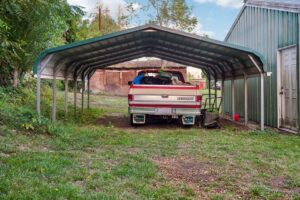
These structures are often open-sided and designed for protection rather than complete enclosure. This design can make them more vulnerable to wind.
- Uplift on Roof Panels: The large, often flat or gently sloped roofs of RV covers and carports are prime targets for wind uplift.
- Lateral Loads on Posts: The supporting posts must be strong enough and properly anchored to withstand sideways wind pressure, especially when the sides are open.
- “Sail Effect”: If an RV or vehicle is parked partially under a cover, it can create a sail effect, increasing the wind load on the structure.
Metal Garages and Workshops: Securing Your Tools and Vehicles
While enclosed, garages and workshops still require significant wind resistance.
- Pressure on Walls and Roof: The higher wind speeds in certain areas can exert substantial pressure on walls and roofs, potentially causing buckling or collapse.
- Door and Window Integrity: While not strictly wind engineering of the steel frame, the design and installation of garage doors and windows are crucial for overall building integrity under wind stress.
Steel Barns and Agricultural Buildings: Farming in the Elements
These structures often house valuable equipment and livestock.
- Large Span Structures: Many barns are designed with wide, open spans, which can create unique wind load challenges.
- Agricultural Equipment: The presence of large equipment inside can affect internal air pressure dynamics during high winds.
- Livestock Safety: Ensuring the structural integrity of a barn is paramount for the safety of animals housed within.
Industrial and Commercial Steel Buildings: Business Continuity
For businesses, a steel building is a significant investment. Its ability to withstand weather directly impacts operational continuity.
- High Wind Zones: Warehouses, manufacturing facilities, and other commercial structures often face higher wind risks due to their location or size.
- Equipment and Inventory Protection: The loss of a commercial building to high winds can be financially devastating.
- Building Codes Nuances: Commercial building codes can be more stringent than residential ones, requiring more comprehensive engineering.
Understanding the significance of wind engineering in the design and construction of steel buildings is crucial for ensuring their longevity and safety. For those interested in exploring related topics, an insightful article on the importance of proper installation techniques can be found here: metal carports near Ravalli County, Montana. This resource highlights how effective installation practices can enhance the resilience of structures against wind forces, further emphasizing the need for specialized engineering in steel building projects.
Buyer’s Guidance: Ensuring Your Steel Building is Wind-Ready
| Metrics | Importance |
|---|---|
| Wind Load Calculation | Essential for determining structural integrity |
| Building Stability | Crucial for preventing structural failure during high winds |
| Material Selection | Impacts the ability to withstand wind forces |
| Code Compliance | Necessary for meeting safety standards |
| Cost Considerations | Affects budgeting for wind-resistant design |
Making an informed decision about your steel building starts with asking the right questions and understanding what to look for.
Key Questions to Ask Your Metal Building Supplier
Don’t be afraid to delve into the specifics of wind engineering.
- “Do your buildings come with engineer-sealed plans for my specific location?”
- “Can you provide documentation showing compliance with the latest local building codes for wind loads?”
- “What is the design wind speed and exposure category your buildings are engineered for in my area?”
- “What type of bracing systems are incorporated into the design?”
- “How are the connections between panels, beams, and posts engineered to withstand uplift and lateral forces?”
- “Are your buildings tested or certified for wind resistance?”
Understanding Pricing Factors Related to Wind Engineering
Higher wind load requirements often translate to increased costs, and it’s important to understand why.
- Stronger Materials: Engineering for higher wind speeds might necessitate thicker gauge steel, stronger framing members, and more robust fasteners.
- Increased Steel Content: More steel often means a higher price.
- Complex Connections: Designing and fabricating stronger, more specialized connections requires more engineering time and potentially more labor or materials.
- Foundation Design: The foundation is the anchor for your building. Higher wind loads may require a more substantial and expensive foundation design.
The Role of Foundation in Wind Resistance
The strongest steel frame is useless if it isn’t securely anchored.
- Anchor Bolts: These embed into the concrete foundation and connect the steel frame to the ground. Their size, number, and embedment depth are critical.
- Concrete Strength: The quality and thickness of your concrete foundation directly impact its ability to resist uplift forces.
- Site-Specific Foundation Engineering: For areas with extremely high wind loads or challenging soil conditions, a geotechnical engineer may be required to design the optimal foundation.
Frequently Asked Questions About Wind Engineering in Steel Buildings
Q1: I live in a moderate wind area. Do I still need to worry about wind engineering?
A1: Yes. Even moderate wind speeds can cause significant damage to poorly designed or constructed buildings over time, especially with repeated gusts. Building codes are designed for safety, and adhering to them ensures your structure can withstand expected conditions.
Q2: How can I verify if a building is truly engineered for my area’s wind loads?
A2: Request engineer-sealed plans. These documents are signed and dated by a licensed engineer and show detailed calculations for wind loads, snow loads, and other relevant forces based on your specific location and building codes.
Q3: Will my homeowner’s insurance be affected by the level of wind engineering?
A3: Absolutely. Insurance companies often require buildings to meet or exceed local building codes. A certified, well-engineered building can lead to lower premiums and easier claims processing in the event of damage. Conversely, a non-compliant structure could result in denied claims.
Q4: Are pre-fabricated metal buildings less safe than custom-built ones regarding wind?
A4: Not necessarily. Many reputable pre-fabricated metal building manufacturers use sophisticated engineering and quality control. The key is to ask for proof of engineering and compliance specific to your site, regardless of whether it’s a kit or custom-designed.
Q5: What’s the difference between a building designed for “wind resistance” and one with proper “wind engineering”?
A5: “Wind resistance” can be a vague marketing term. “Wind engineering” refers to the systematic, scientific process of calculating wind forces and designing the structure, materials, and connections to withstand those forces, often backed by professional engineering certification.
Conclusion: Investing in Durability Through Sound Engineering
Choosing a metal carport, garage, barn, RV cover, or steel building is a long-term investment. Prioritizing wind engineering isn’t an added expense; it’s a fundamental aspect of ensuring that investment’s longevity, safety, and value. By understanding the principles of wind loads, the importance of certification and codes, and by asking the right questions, you can confidently select a steel building that is engineered not just to stand, but to endure. This proactive approach safeguards your property, your assets, and your peace of mind against the unpredictable power of wind.
FAQs
What is wind engineering and why does it matter for steel buildings?
Wind engineering is the study of the effects of wind on structures and the built environment. It matters for steel buildings because wind loads can exert significant forces on the building, which can affect its stability and structural integrity.
How does wind affect steel buildings?
Wind can exert pressure on the exterior surfaces of a steel building, causing it to sway and vibrate. This can lead to fatigue and potential failure of the building’s components if not properly designed to withstand these forces.
What are some key considerations in wind engineering for steel buildings?
Key considerations in wind engineering for steel buildings include determining the wind loads the building will be subjected to, designing the building to resist these loads, and ensuring that the building’s components are properly connected and anchored to withstand wind forces.
How is wind engineering incorporated into the design and construction of steel buildings?
Wind engineering is incorporated into the design and construction of steel buildings through the use of advanced computer modeling and simulation techniques to analyze wind loads, as well as the use of specialized building materials and structural systems that are specifically designed to resist wind forces.
What are the benefits of considering wind engineering in the design of steel buildings?
Considering wind engineering in the design of steel buildings can lead to structures that are more resilient and durable, with reduced risk of damage or failure due to wind loads. This can result in safer and more cost-effective buildings in the long run.