When you’re safeguarding your vehicles, equipment, or livestock, the choice between a metal garage and a wood garage is a significant one. Both offer protection, but their characteristics, longevity, and suitability for various needs differ considerably. As a property owner, understanding these distinctions is crucial for making an informed investment that aligns with your specific requirements and local conditions.
This guide dives deep into the metal versus wood garage debate, equipping you with the knowledge to choose the ideal structure for your home, ranch, or business. We’ll break down the critical factors, from initial cost to long-term durability, helping you navigate the options to find the perfect fit.
Before comparing materials, it’s vital to define what your garage will be used for. This dictates not only the size but also the structural integrity and specific features you’ll need.
Key Considerations for Garage Functionality
- Vehicle Storage: Protecting cars, trucks, motorcycles, and ATVs from weather, theft, and vandalism.
- Workshop Space: Providing a dedicated area for DIY projects, repairs, and hobbies, often requiring good lighting and ventilation.
- Equipment Storage: Storing lawnmowers, gardening tools, tractors, and other machinery.
- Livestock Shelter: For ranch owners, a barn-style structure can offer essential protection for horses, cattle, or other animals.
- RV and Boat Storage: Accommodating larger vehicles that require significant height and width clearances.
- General Storage: A catch-all for seasonal items, recreational gear, and other household overflow.
The intended use will inform everything from the required dimensions to the necessity of features like insulation, windows, or specialized doors.
When considering the advantages and disadvantages of metal garages versus wood garages, it’s essential to explore various factors such as durability, maintenance, and cost. A related article that delves deeper into the benefits of steel buildings can be found at Steel Buildings for Sale Near Cache County, UT. This resource provides valuable insights into why many homeowners are opting for metal structures over traditional wooden options, highlighting their resilience and long-term value.
Metal Garages: Engineering, Durability, and Modern Solutions
Metal garages, primarily constructed from galvanized steel, have become a dominant choice for many property owners due to their robust engineering, low maintenance, and quick installation.
The Backbone of Steel: Understanding Galvanized Steel
Galvanized steel is steel that has been coated with a layer of zinc. This protective coating shields the steel from rust and corrosion, significantly extending its lifespan, especially in outdoor environments exposed to moisture and varying weather conditions. The quality of the galvanization process, often referred to by its coating weight (e.g., G90), directly impacts its resistance to the elements. For demanding environments, higher galvanization coatings are recommended.
Benefits of Metal Garage Construction
- Durability and Longevity: Properly engineered and maintained metal garages can last for decades. Steel is resistant to rot, termites, and fire, offering a significant advantage over wood.
- Strength and Load Capacity: Steel is inherently strong and can be engineered to withstand substantial snow loads and high wind speeds. This is particularly important in regions with harsh weather patterns.
- Low Maintenance: Aside from occasional cleaning or a new coat of paint if desired for aesthetic reasons, metal garages require minimal upkeep. They won’t warp, crack, or splinter.
- Cost-Effectiveness: While initial investment varies, the long-term cost of ownership for metal garages is often lower due to reduced maintenance and repair needs.
- Rapid Installation: Prefabricated metal building components allow for much faster assembly compared to traditional wood construction. This translates to less disruption to your property.
- Resistance to Pests and Fire: Unlike wood, steel is immune to termite infestations and is non-combustible, offering a higher level of safety.
Common Metal Garage Structures
- Prefabricated Metal Garages: These are factory-built kits delivered to your site for assembly. They offer a wide range of sizes and designs.
- Custom-Designed Steel Buildings: For unique needs or larger structures like industrial workshops or agricultural barns, custom steel buildings provide maximum flexibility.
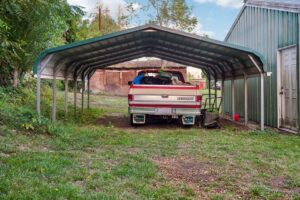
- Carports and RV Covers: While not fully enclosed garages, these structures offer significant protection against sun, rain, and hail with an open-sided design.
Wood Garages: Classic Aesthetics and Traditional Appeal
Wood garages have been a staple for centuries, offering a traditional aesthetic that can blend seamlessly with existing architectural styles.
The Appeal of Timber: When Wood Works
Wood, typically lumber like pine, fir, or cedar, provides a warm, natural look that many homeowners prefer. It’s a versatile material that can be easily customized during construction.
Benefits of Wood Garage Construction
- Aesthetic Versatility: Wood can be painted, stained, and further customized to match or complement your home’s exterior.
- Ease of Modification: Adding windows, doors, or built-in shelving is generally simpler during the initial construction or later modifications compared to steel.
- Familiar Construction Methods: Many contractors are highly experienced with wood framing, potentially leading to a wider selection of builders.
- Insulation Potential: Wood structures can be more easily insulated during construction to create climate-controlled environments.
Challenges of Wood Garages
Despite their appeal, wood garages come with inherent challenges that require careful consideration, especially in certain climates.
- Maintenance Demands: Wood requires regular maintenance to protect it from the elements. This includes sealing, painting, or staining to prevent rot, warping, and fading.
- Vulnerability to Pests: Termites, carpenter ants, and other wood-boring insects can cause significant structural damage that may not be immediately apparent.
- Fire Hazard: Wood is combustible, posing a higher fire risk compared to steel.
- Susceptibility to Rot and Warping: Exposure to moisture can lead to wood rot and structural instability. Extreme temperature fluctuations can also cause wood to warp or crack.
- Longer Construction Time: Traditional wood framing is a more labor-intensive process, typically resulting in longer build times.
- Higher Long-Term Costs: Due to ongoing maintenance, repairs for pest damage or rot, and potential replacement of components, the total cost of ownership for a wood garage can exceed that of a metal structure over its lifespan.
Sure, here is the sentence with the clickable link:
Watch our Expert Metal Carport and Steel Building Installation Videos on YouTube.
Key Comparison Factors: Metal vs. Wood Garage
When deciding between metal and wood, several crucial factors should be weighed to ensure you’re making the most practical and economical choice.
Durability and Longevity: A Long-Term View
- Metal Garages: With proper galvanization and construction, steel buildings are exceptionally durable. They resist rust (when protected), rot, pests, and fire. They are engineered for longevity, often with warranties of 20-50 years or more, depending on the manufacturer and gauge of steel.
- Wood Garages: The longevity of a wood garage is heavily dependent on upfront material quality, construction practices, and ongoing maintenance. Without meticulous care, wood is susceptible to degradation from moisture, insects, and UV exposure. A well-maintained wood garage can last decades, but it demands consistent attention.
Weather Resistance: Engineering for the Elements
- Metal Garages: Modern metal garages are engineered to meet stringent building codes for wind load and snow load. This means they are designed to withstand specific wind speeds and the weight of accumulated snow in your region. Manufacturers often provide certification for their structures, attesting to their engineering integrity. This is a significant advantage for property owners in areas prone to storms or heavy snowfall.
- Wood Garages: While wood can be engineered to handle weather, it’s inherently more susceptible to damage from extreme conditions. Heavy snow loads can put significant stress on wooden beams, and high winds can compromise structural integrity if not built to exacting standards. Moisture infiltration can accelerate rot, weakening the structure over time.
Maintenance Requirements: Investing Your Time and Money
- Metal Garages: The primary maintenance for a metal garage is keeping the exterior clean. Occasional inspection for any minor dents or paint chips (if painted) is advisable. The structural components require no ongoing treatment against pests or rot.
- Wood Garages: Wood requires regular attention. This includes periodic sealing, staining, or painting to protect against UV rays and moisture. Treatments for insect prevention are also important. Any signs of rot, warping, or pest infestation necessitate prompt repairs to prevent further damage.
Cost: Initial Investment vs. Lifetime Value
- Metal Garages: The initial cost of a metal garage can vary based on size, design complexity, gauge of steel, and any additional features. However, when considering the long-term value, the low maintenance and repair costs often make them more economical over their lifespan. Prefabricated kits can be competitively priced.
- Wood Garages: The initial cost of a wood garage can be comparable to or even less than a metal one, especially for smaller, simpler structures. However, the ongoing expenses for maintenance, potential repairs due to rot or pests, and eventual replacement of damaged components can significantly increase the total lifetime cost.
Installation and Site Preparation
- Metal Garages: Prefabricated metal garages are typically installed rapidly by specialized crews. Site preparation usually involves leveling the ground and preparing a foundation (e.g., concrete slab or piers). The modular nature of steel buildings simplifies assembly.
- Wood Garages: Wood garage construction is a more involved process, often taking longer than metal installation due to traditional framing techniques. A concrete foundation is standard, and the framing, roofing, and siding all require skilled labor.
Resistance to Pests and Fire
- Metal Garages: Steel is impervious to termites, carpenter ants, and other wood-boring insects. It also offers superior fire resistance, as steel is non-combustible. This can be a critical factor for property owners in areas with high insect activity or fire risks.
- Wood Garages: Wood is a food source for termites and ants. It is also combustible, making fire a significant concern. Proper treatments and fire-resistant building practices can mitigate these risks, but they cannot eliminate them entirely.
When considering the advantages of a metal garage versus a wood garage, it’s essential to explore various factors such as durability, maintenance, and cost. For those interested in learning more about the installation process and finding local services, a helpful resource can be found in this article on metal carport installers. This information can assist homeowners in making informed decisions about their garage options while ensuring they have access to reliable installation services.
Understanding Building Codes and Certifications
| Comparison | Metal Garage | Wood Garage |
|---|---|---|
| Durability | High | Medium |
| Maintenance | Low | High |
| Cost | Lower initial cost | Higher initial cost |
| Customization | Limited | High |
| Installation Time | Short | Long |
For any substantial structure like a garage, adhering to local building codes is non-negotiable. This ensures safety, structural integrity, and compliance for insurance purposes and potential resale.
The Role of Building Codes: Local Requirements
Building codes are standards set by local governments to ensure structures are safe to occupy and withstand expected environmental conditions. Key aspects of codes relevant to garages include:
- Wind Load Ratings: Governs how much wind pressure a structure must withstand.
- Snow Load Ratings: Dictates the structural capacity to handle the weight of accumulated snow.
- Foundation Requirements: Specifies the type and depth of foundations needed for stability.
- Setback Requirements: Defines how close a structure can be built to property lines.
- Permitting and Inspections: Most new construction requires permits and inspections at various stages.
Certification: Assuring Engineering Integrity
- Metal Garages: Reputable metal garage manufacturers often provide engineered drawings and certifications that confirm their buildings meet or exceed local building codes for wind and snow loads. This certification is crucial for obtaining permits and assures you that the structure has been designed by qualified engineers for your specific region’s environmental challenges. Look for manufacturers who are transparent about their engineering processes and offer certified plans.
- Wood Garages: While wood structures are built to code, the certification process is less standardized. The integrity relies more heavily on the individual contractor’s experience and adherence to blueprints. The structural engineer’s stamp on the architectural plans is usually the primary form of certification for wood builds.
Sizing Your Garage: Practical Dimensions for Your Needs
The right size garage is one that comfortably houses your vehicles and equipment while allowing for easy access and maneuverability.
Essential Sizing Guidelines
- Single Car Garage: Typically 12-14 feet wide and 20-24 feet long.
- Two Car Garage: Usually 20-24 feet wide and 20-24 feet long. For larger vehicles, consider a wider width.
- RV Cover/Garage: Dimensions vary significantly based on the RV length and height. Common widths range from 12-18 feet, with lengths extending to 40 feet or more. Height is critical, often needing 14-16 feet clearance.
- Barns/Workshops: These can be much larger, customized to the specific needs of agricultural operations or detailed workshops.
Buyer Guidance: Always measure your largest vehicle or piece of equipment and add at least 3-4 feet of clearance on all sides, plus space for opening doors and walking around. Consider future needs as well.
Pricing Factors: What Influences the Cost?
The price you pay for a garage, whether metal or wood, is influenced by several key variables.
Key Pricing Determinants
- Size and Dimensions: Larger structures naturally cost more.
- Gauge of Steel (for Metal): Thicker gauge steel (lower number, e.g., 12-gauge vs. 14-gauge) offers greater strength and durability, often at a higher price.
- Type of Wood and Construction: The species of wood used, the complexity of the framing, and the quality of finishing materials impact wood garage costs.
- Foundation: The type and size of the foundation required (e.g., concrete slab, piers) is a significant cost component.
- Doors and Windows: Additional doors, larger garage doors, and extra windows increase the price.
- Certification and Engineering: For metal buildings, certified engineering plans are often factored into the price.
- Installation Costs: Labor for assembly or construction will vary depending on region and complexity.
- Delivery Fees: For prefabricated structures, delivery to your site is a factor.
- Roof Style: Different roof designs (e.g., gambrel, gable, standard) on both metal and wood structures can affect material and labor costs.
- Local Market Conditions: Supply and demand, labor rates, and material availability in your area will influence pricing.
Metal vs. Wood Garage: A Direct Comparison
| Feature | Metal Garage | Wood Garage |
| : | :– | :– |
| Durability | High (resistant to rot, pests, fire) | Moderate (requires consistent maintenance to prevent degradation) |
| Longevity | Very High (decades with minimal upkeep) | Moderate to High (dependent on quality, climate, and maintenance) |
| Maintenance | Low (cleaning, occasional paint touch-ups) | High (sealing, painting, pest treatment) |
| Weather Impact | Excellent (engineered for wind/snow load) | Moderate (susceptible to rot, warping from moisture and extreme temps) |
| Pest Resistance | Excellent (immune to termites, ants) | Poor (vulnerable to wood-boring insects) |
| Fire Resistance | Excellent (non-combustible) | Poor (combustible) |
| Installation | Fast (prefabricated kits) | Slower (traditional framing) |
| Cost (Initial) | Moderate to High (variable by gauge, size, complexity) | Moderate to High (variable by wood type, size, design) |
| Cost (Lifetime) | Generally Lower (due to low maintenance and repair needs) | Generally Higher (due to ongoing maintenance and potential repairs) |
| Aesthetics | Modern, utilitarian (can be painted or clad for aesthetics) | Classic, natural (easily painted, stained to match surroundings) |
| Modification | More complex to alter post-construction | Relatively easier to modify post-construction |
| Certification | Often available for wind/snow load compliance | Relies on contractor expertise and engineering plans |
Buyer Guidance: Making Your Final Decision
When standing at the crossroads of metal versus wood, consider these final points for your property.
- Climate Assessment: If you live in an area with extreme weather – heavy snowfall, high winds, high humidity, or significant insect populations – metal buildings often present a more robust and lower-maintenance solution.
- Long-Term Investment: Think about the total cost of ownership. While a wood garage might seem cheaper initially, the cost of annual maintenance, repairs, and potential pest remediation can quickly add up. Metal garages typically offer a better return on investment over their lifespan.
- Aesthetic Preferences: If the visual integration with your home’s existing architecture is paramount and you are committed to regular upkeep, a wood garage can be a beautiful choice. However, many modern metal garages can be clad with other materials or painted to achieve a desired look.
- Budget and Timeline: If you need a structure quickly and with minimal disruption, prefabricated metal garages are often the fastest to erect.
- Insurance Considerations: Some insurance providers may offer lower premiums for structures that are less susceptible to fire or pest damage, which often favors metal. Always check with your insurance agent.
Frequently Asked Questions (FAQ)
Here are concise answers to common questions homeowners and property owners ask about metal versus wood garages.
Q1: Can metal garages rust?
While steel can rust, modern galvanized steel is treated with a zinc coating for protection. If the coating is intact and the structure is properly installed, rust is not a significant concern. Minor surface rust can occur in high-moisture areas or if scratched, but it can usually be treated and repainted.
Q2: Are wood garages more expensive to insure?
Generally, wood garages may carry higher insurance premiums due to their combustibility and susceptibility to damage from pests and rot. Metal garages, being non-combustible and resistant to pests, might qualify for lower rates. It’s always best to verify with your insurance provider.
Q3: Which type of garage is better for a workshop?
Both can serve as workshops. Metal buildings offer a cleaner, pest-free environment and excellent structural integrity for heavier equipment. Wood buildings are easier to insulate and modify for creating custom workspaces, but require more attention to moisture and pest control.
Q4: Can I install a metal garage myself?
Many prefabricated metal garages are designed for DIY installation, especially smaller units. However, for larger or more complex structures, professional installation is highly recommended to ensure structural integrity and compliance with building codes.
Q5: How do I choose the right size garage?
Measure your vehicles or equipment, add sufficient clearance (3-4 feet minimum) for maneuvering and walking, and consider storage for tools or other items. It’s often better to build slightly larger than you initially think you need.
Q6: What are the typical snow load requirements in my area?
Snow load requirements are determined by your local building department based on historical weather data. Reputable metal building suppliers will ask for your zip code to ensure their structures are engineered to meet these specific snow load capacities.
Q7: Is a concrete foundation necessary for both types?
While a concrete slab is the most common and recommended foundation for both metal and wood garages for stability and durability, other foundation types like concrete piers or treated post foundations can be used in some cases, especially for carports or certain rural structures. Always consult local building codes.
The choice between a metal and wood garage is a decision that impacts your property’s security, aesthetics, and long-term value. By thoroughly understanding the strengths and weaknesses of each material, and considering your specific environmental conditions and intended use, you can confidently select the structure that will best serve your needs for years to come.
FAQs
1. What are the advantages of a metal garage over a wood garage?
Metal garages are typically more durable and require less maintenance than wood garages. They are also more resistant to pests, fire, and rot.
2. What are the advantages of a wood garage over a metal garage?
Wood garages are often considered more aesthetically pleasing and can be easier to customize. They also provide better insulation and can be more environmentally friendly.
3. Which type of garage is more cost-effective in the long run?
While metal garages may have a higher upfront cost, they generally require less maintenance and have a longer lifespan, making them more cost-effective in the long run.
4. Which type of garage is easier to construct?
Metal garages are typically easier and quicker to construct than wood garages due to their prefabricated nature. Wood garages may require more time and labor for construction.
5. Which type of garage is more suitable for specific climates or environments?
Metal garages are better suited for areas with harsh weather conditions, such as heavy snow or high winds, while wood garages may be more suitable for moderate climates.