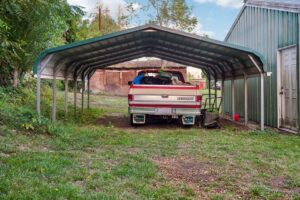
Are you a homeowner in need of reliable vehicle protection? A rancher looking to safeguard farm equipment? Or a business owner seeking durable storage solutions? When it comes to protecting your valuable assets from the elements, the decision often boils down to metal carports versus metal garages. Both offer significant advantages, but understanding their core differences and how they align with your specific needs, local codes, and budget is crucial. This isn’t just about covering your car; it’s about making a strategic investment in property protection and value.
Understanding the Basics: Carport vs. Garage
Let’s start with clear definitions to establish our baseline.
- Metal Carport: Fundamentally, a metal carport is a covered structure, typically open on one or more sides, designed primarily to shelter vehicles from sun, hail, rain, and light snow. They consist of a steel frame supporting a metal roof. Think of it as a robust, permanent awning for your vehicles. They offer convenient, quick access and good ventilation.
- Metal Garage: A metal garage is an enclosed, fully secured structure. It provides complete protection from the elements, enhances security against theft and vandalism, and offers a more versatile space for storage, workshops, or even additional usable areas. These structures typically feature roll-up doors, walk-in doors, and windows, all housed within a sturdy steel frame and sheeting.
The primary distinction lies in enclosure and security. One is a shelter, the other is an ultimate protective barrier and functional space. Both are engineered for durability, but their applications and benefits diverge significantly.
When considering the advantages of metal carports versus traditional garages, it’s essential to explore various factors such as cost, durability, and space requirements. For those interested in metal storage solutions, a related article that provides valuable insights is available at Metal Storage Buildings Near Jefferson County, ID. This article discusses different types of metal structures and their benefits, helping you make an informed decision about your storage needs.
Structural Integrity: Engineering, Loads, and Certification
Regardless of whether you choose a carport or a garage, the structural integrity of your metal building is paramount. This isn’t a cosmetic choice; it’s about safety, longevity, and compliance.
Engineering for Durability: The Backbone of Your Investment
Modern metal carports and garages are far removed from flimsy, temporary structures. They are engineered systems designed to withstand significant environmental stressors. This involves precise calculations for beam sizes, bracing, foundation requirements, and panel fasteners. Reputable manufacturers utilize advanced CAD software and structural engineers to ensure each design meets stringent quality standards.
Snow Load: Defying Winter’s Weight
For property owners in regions experiencing snowfall, snow load capacity is a critical consideration. Snow, especially wet or compacted snow, can exert immense weight on a roof.
- What it means: Snow load refers to the maximum weight per square foot (PSF) that the roof of a structure can safely support without compromising its structural integrity.
- Why it matters: An inadequate snow load rating can lead to roof collapse, extensive property damage, and potentially dangerous situations.
- Buyer Guidance: Always confirm the snow load rating with your manufacturer, ensuring it meets or exceeds your local building codes. Standard ratings can range from 10 PSF to 60+ PSF, depending on the region. For areas like the Rocky Mountains or Upper Midwest, higher ratings are mandatory.
Wind Load: Standing Strong Against the Storm
Wind, particularly in open areas or coastal regions, can exert powerful uplift and lateral forces on structures.
- What it means: Wind load is the pressure per square foot (PSF) that a structure can withstand from wind forces without suffering damage or collapse.
- Why it matters: High winds can literally rip unsecured or inadequately engineered structures from their foundations. Even sustained moderate winds can cause fatigue over time.
- Buyer Guidance: Look for wind load certifications, often expressed in Miles Per Hour (MPH). Common ratings range from 90 MPH to 140+ MPH. Coastal areas, tornado alleys, and open plains typically require higher ratings. Proper anchoring, detailed below, is integral to meeting wind load requirements.
Building Codes and Certification: Your Assurance of Compliance
Before any installation, especially for larger structures, understanding local building codes is essential. These codes dictate minimum requirements for snow load, wind load, foundation, and sometimes even aesthetics.
- Importance of Certification: Certified metal buildings are designs that have been reviewed and approved by state-licensed engineers to meet specific local or national building codes. Requesting engineer-stamped drawings is crucial for obtaining permits.
- Permitting Process: Most jurisdictions require permits for metal garages and often for larger carports. This involves submitting plans, paying fees, and undergoing inspections. Ignoring this step can lead to fines, demolition orders, and insurance issues.
- Local Relevance: Always contact your local planning or building department before purchasing. Ask about specific requirements for carports, garages, and steel buildings in your county or city. This preemptive step can save significant time and money.
Installation and Site Preparation: Laying the Groundwork for Success
Whether it’s a simple carport or a complex multi-bay garage, proper installation and site preparation are non-negotiable for stability and longevity.
Foundation Types: The Bedrock of Your Building
The foundation transfers the building’s weight to the ground and anchors it against uplift forces.
- Concrete Pad: The gold standard for both carports and garages. A level concrete slab provides the most stable and durable base, prevents moisture intrusion, and simplifies anchoring. For garages, it offers an ideal floor for vehicles and equipment.
- Asphalt: A viable option for carports, offering a somewhat level surface. Less durable than concrete and generally not recommended for enclosed garages due to potential shifting and weed growth.
- Gravel/Dirt: Acceptable for smaller carports or temporary structures, primarily for economic reasons. Requires thorough leveling and compaction. Not suitable for garages due to moisture, dust, and instability issues. Important Note: Even with gravel or dirt, concrete footings or piers are often required for anchoring, especially for certified structures.
Anchoring Systems: Securing Your Investment
Anchoring is critical for resisting wind uplift and lateral forces.
- Concrete Anchors: J-bolt or wedge anchors drilled into a concrete slab provide superior holding power, essential for certified structures.
- Auger/Helix Anchors: Screwed into the ground, suitable for dirt or gravel foundations, offering good resistance but generally less than concrete anchors.
- Rebar Anchors: Driven into the ground through concrete footings or directly for uncertified carports. Simpler but offer less resistance.
DIY vs. Professional Installation: Weighing Your Options
The complexity of the structure and your personal skill set will dictate the best approach.
- DIY Installation: Possible for smaller, simpler carports if you have basic construction skills and helpers. However, ensure you understand instructions thoroughly, have proper tools, and prioritize safety.
- Professional Installation: Highly recommended for garages, larger carports, or any certified building. Professional installers ensure correct assembly, proper alignment, and adherence to engineering specifications, which is crucial for warranty validation and passing inspections. Many manufacturers offer installation as part of their package.
Sure, here is the sentence with the clickable link:
Watch our Expert Metal Carport and Steel Building Installation Videos on YouTube.
Sizing and Customization: Tailoring to Your Needs
One of the great advantages of metal buildings is their adaptability. From a single-vehicle carport to a massive agricultural building, customization is key.
Common Sizes and Configurations
- Carports:
- Single Car: Typically 12’x21′, providing ample space for one sedan or small truck.
- Double Car: Commonly 18’x21′ or 20’x21′, fitting two standard vehicles side-by-side.
- Triple Car (Triple Wide): 24’x21′ or 30’x21′, accommodating three vehicles or offering extra space for ATVs, motorcycles, or trailers alongside cars.
- RV Carports (RV Covers): Taller and wider, often 12-15 feet high and 18-24 feet wide, specifically designed for recreational vehicles, boats, or farm equipment. Lengths vary from 26 feet up to 50+ feet.
- Custom Lengths: Most manufacturers offer lengths in increments of 5 feet, allowing you to match your exact needs.
- Garages: Sizes mirror carports in terms of width and length, but standard sidewall heights start around 8 feet and can extend to 16 feet or more for commercial or industrial applications.
- Standard Garage Doors: Typical openings are 8’x7′ for single cars and 9’x7′ or 10’x8′ for larger vehicles. Double garage doors are often 16’x7′ or 18’x8′.
- Customization: Garages offer more in the way of customization with multiple door placements, windows, and interior partitioning.
Factors Influencing Size Selection
- Current Vehicle Fleet: Measure your longest and widest vehicles, allowing for operational space around them.
- Future Needs: Are you planning to acquire a larger vehicle, an RV, or more equipment? Build for growth.
- Usage: Is it purely for parking, or will it be a workshop, storage area, or combination? Workshops need more depth and width.
- Property Constraints: Account for setbacks, easements, and available footprint on your land.
- Local Zoning: Your municipality may have restrictions on building size, height, and proximity to property lines.
Customization Options
- Enclosure (for Carports): Adding side panels or gables can convert a carport into a partially enclosed shelter, offering more protection while maintaining some openness.
- Garage Doors: Roll-up garage doors (manual or automatic), varying in size, color, and insulation.
- Walk-in Doors: Essential for convenient access to garages without opening the main bay.
- Windows: Provide natural light and ventilation for garages.
- Roof Styles:
- Regular Roof (Arched): The most economical. Panels run horizontally.
- A-Frame Horizontal Roof (Boxed Eave): Aesthetically pleasing, matching traditional home roofs. Panels run horizontally.
- Vertical Roof: The strongest and most durable. Panels run vertically, allowing snow and debris to slide off easily. Recommended for heavy snow areas and larger structures.
- Pitch: The steepness of the roof. Steeper pitches shed water and snow more effectively.
- Colors: A wide array of color options for roof, trim, and walls to match existing structures.
- Gauge of Steel: Thicker steel (lower gauge number, e.g., 12 gauge vs. 14 gauge) offers greater strength, especially for the frame. A 12-gauge frame is generally recommended for larger structures or areas with heavy loads.
- Insulation: Available for garages to regulate temperature, reduce condensation, and improve energy efficiency.
When considering the advantages of a metal carport versus a traditional garage, it’s essential to explore various factors such as cost, durability, and installation options. For those interested in finding reliable installation services, you might want to check out this informative article on steel building contractors near you, which can provide valuable insights into local professionals who can assist with your project. Understanding these aspects can help you make a more informed decision that best suits your needs.
Pricing Factors and Budgeting: Where Your Money Goes
The cost of a metal carport or garage isn’t just the sticker price; it’s a sum of material choice, customization, location, and labor. Understanding these factors helps you budget effectively.
Key Cost Drivers
- Size (Length, Width, Height): The larger the footprint and the taller the structure, the more material is required, leading to higher costs.
- Roof Style: Vertical roofs are generally more expensive due to more complex framing but offer superior performance. Regular roofs are the most economical.
- Gauge of Steel: 12-gauge frames are more expensive than 14-gauge but provide enhanced durability and often required for certifications.
- Enclosure (Walls, Doors, Windows): Adding full walls, multiple garage doors, walk-in doors, and windows significantly increases the cost of a garage compared to an open carport.
- Certification Requirements: Engineer-stamped plans and heavier-duty materials for meeting snow and wind loads add to the base price.
- Foundation: A concrete slab will be an additional cost factor (often handled by the property owner, not the metal building supplier).
- Installation: DIY saves labor costs, but professional installation adds to the overall price.
- Delivery Location: Remote or difficult-to-access sites may incur additional delivery charges.
- Customizations: Specialized colors, insulation, lean-tos, or specific aesthetic features will increase the price.
Getting an Accurate Quote
- Be Specific: Provide exact dimensions, desired features, and your location’s specific snow and wind load requirements.
- Compare Multiple Suppliers: Get quotes from at least three reputable manufacturers or dealers.
- Question Included Services: Clarify if the quote includes delivery, installation, anchors, and any necessary permits or engineering plans.
- Watch for Hidden Fees: Ask about potential surcharges for site conditions or modifications.
Long-Term Value vs. Upfront Cost
While a carport is initially cheaper, a garage offers superior protection, security, and versatility, potentially adding more long-term value to your property. Consider the replacement cost of items you’re protecting (vehicles, equipment, inventory) against the cost of the structure.
Carport vs. Garage: Making Your Informed Decision
Now that we’ve covered the fundamentals, let’s directly compare the two options to help you determine which is the better fit for your specific property and needs.
Pros and Cons: A Side-by-Side Look
| Feature | Metal Carport | Metal Garage |
|---|---|---|
| Purpose | Basic vehicle shelter (sun, hail, rain, light snow). | Comprehensive protection, secure storage, workshop, multi-functional space. |
| Cost | Lower initial investment. | Higher initial investment due to enclosure and features. |
| Protection | Partial protection from elements. Open sides mean exposure to wind-driven rain, dust. No security. | Complete protection from all elements, dust, pests. High security against theft/vandalism. |
| Security | None. Vehicles/items are fully exposed. | Excellent. Lockable doors and windows provide peace of mind. |
| Versatility | Limited to parking/shelter. Can be used for covered outdoor storage. | Highly versatile: parking, workshop, storage, man cave, office, business operations. |
| Installation | Generally quicker and simpler, often DIY-friendly for smaller units. | More complex, typically requires professional installation. Longer build time. |
| Permitting | Often not required for smaller units, or simpler permits depending on local codes. | Almost always requires permits due to size, enclosure, and impact on property. |
| Foundation Needs | Can often be installed on gravel/dirt with proper anchoring, though concrete is best. | Strongly recommended to be installed on a level concrete slab. |
| Aesthetics | Functional, may not blend as seamlessly with residential architecture. | Can be customized to match home aesthetics, often enhances property value. | Resale Value | Minimal direct impact on property value, but a well-maintained one can be a selling point. | Significant positive impact on property value, seen as an extension of the home. |
Use Cases and Recommendations
- Choose a Metal Carport if:
- You primarily need protection from sun, hail, or moderate rain.
- Budget is a primary concern, and you’re seeking the most cost-effective solution.
- You need quick, convenient access to your vehicles or equipment.
- Security is not a major concern.
- Your local climate is generally mild, or you’re using it in conjunction with other sheltered parking.
- You have an RV, boat, or tractor that needs overhead protection but full enclosure isn’t critical.
- Example: Homeowner in Arizona needing shade for multiple vehicles, or a rancher needing a quick cover for hay or a tractor.
- Choose a Metal Garage if:
- You require complete, all-weather protection from severe elements (heavy snow, high winds, prolonged rain).
- Security is a top priority for valuable vehicles, tools, or other assets.
- You need a dedicated, enclosed space for a workshop, hobby area, or business operations.
- You want to enhance your property’s value and curb appeal significantly.
- Your local climate experiences extreme weather conditions.
- You need temperature control (with insulation) or a dust-free environment.
- Example: Homeowner in the Midwest needing cold-weather protection and secure storage, a business owner needing a secure inventory warehouse, or a rancher needing a fully enclosed repair shop.
For many, the decision comes down to a balance of initial cost, desired level of protection, and intended use. Sometimes, starting with a certified carport frame and planning for future enclosure is a viable strategy, though purchasing a purpose-built garage from the outset is often more cost-effective.
Frequently Asked Questions (FAQ)
Q: Do metal buildings require maintenance?
A: Minimal maintenance. Regular inspections for rust, loose fasteners, and debris on the roof are recommended. Washing panels can help maintain appearance.
Q: How long do metal carports and garages last?
A: With proper installation and minimal maintenance, high-quality galvanized steel structures can last 20-30 years or even longer. Zinc or Galvalume coatings significantly extend lifespan.
Q: Can I add on to my metal building later?
A: Yes, many metal buildings are designed for expandability. It’s often easier and more cost-effective if you plan for potential expansion during the initial purchase. Discuss this with your manufacturer.
Q: Are metal buildings noisy in heavy rain or hail?
A: Without insulation, metal roofs can be louder than traditional shingle roofs during heavy rain or hail. Insulation (for garages) significantly dampens this noise.
Q: What color options are available?
A: Most manufacturers offer a wide selection of colors for panels and trim to match your existing property or aesthetic preferences. Popular choices include white, gray, green, red, and beige.
By weighing these factors conscientiously, property owners can make an informed decision that will serve their needs and protect their investments for years to come.
FAQs
1. What is the difference between a metal carport and a garage?
A metal carport is a structure with a roof and open sides, designed to provide shelter for vehicles. A garage, on the other hand, is a fully enclosed structure with walls, a roof, and a door, providing complete protection for vehicles.
2. What are the advantages of a metal carport?
Metal carports are typically more cost-effective than garages, provide ventilation for vehicles, and can be installed more quickly. They also offer protection from the elements such as sun, rain, and snow.
3. What are the advantages of a garage?
Garages provide complete security and protection for vehicles, as they are fully enclosed and lockable. They also offer additional storage space and can be used for other purposes such as a workshop or home gym.
4. Which option is better for protecting vehicles from theft and vandalism?
Garages are better for protecting vehicles from theft and vandalism, as they provide a secure and lockable space. Metal carports, with their open sides, offer less security in this regard.
5. Which option is better for adding value to a property?
Garages typically add more value to a property compared to metal carports, as they provide additional enclosed space and security. However, the value added can vary depending on the location and specific needs of potential buyers.