When you’re investing in a metal carport, garage, barn, RV cover, or any custom steel building, the roof style is a critical decision. The two most common options are the regular roof and the vertical roof. Understanding the differences, benefits, and drawbacks of each is essential for making an informed choice that best suits your climate, needs, and budget.
Metal building manufacturers offer a range of roof designs, but for carports, garages, and similar structures, the distinction between vertical and regular roofs is paramount. This choice impacts not only the aesthetics and drainage capabilities of your building but also its structural integrity in challenging weather conditions.
What is a Regular Roof Style?
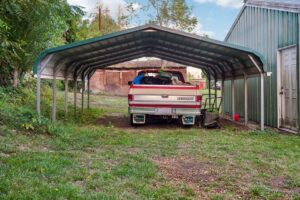
The regular roof, often referred to as a “curved” or “round” roof, is the most basic and cost-effective roof style. It features a simple, curved panel design that follows the standard shape of the carport or garage. The corrugated panels run horizontally along the length of the building. While this style is budget-friendly, its horizontal panel orientation poses limitations, especially in areas prone to heavy precipitation.
Key Characteristics of Regular Roofs:
- Panel Orientation: Corrugated metal panels run horizontally from front to back.
- Aesthetics: Offers a classic, streamlined look.
- Cost: Typically the most affordable roof option.
- Drainage: Relies on gravity for water runoff, which can be less efficient.
What is a Vertical Roof Style?
The vertical roof style is engineered for superior performance and longevity. In this design, the metal roof panels are installed vertically, running from the peak of the roof down to the eaves. This orientation is crucial for effective water and snow shedding. Vertical roofs are often accompanied by a box-section frame and often have more robust framing and bracing, making them the preferred choice for areas with significant snowfall or high winds.
Key Characteristics of Vertical Roofs:
- Panel Orientation: Corrugated metal panels run vertically from the ridge to the eaves.
- Aesthetics: Provides a more modern and substantial appearance.
- Cost: Generally more expensive than regular roofs due to advanced design and materials.
- Drainage: Excellent water and snow shedding capabilities.
When considering the benefits of different roofing styles for metal carports, it’s essential to explore various factors that can influence your decision. A related article that delves into the specifics of custom metal carports and their installation can be found at Custom Metal Carports Near Butte County, ID. This resource provides valuable insights into the advantages of both vertical and regular roofs, helping you make an informed choice based on your needs and local conditions.
Performance & Durability: Vertical Roofs Take the Lead
When evaluating the long-term performance and durability of your metal building, the roof style plays a significant role. Environmental factors such as rain, snow, wind, and even debris can impact the structure.
Drainage: The Vertical Advantage
The most significant advantage of a vertical roof is its superior drainage. Because the panels run vertically, water, snow, and ice naturally flow down and off the roof, preventing pooling and accumulation. This is especially critical in regions that experience heavy rainfall, frequent snowstorms, or freeze-thaw cycles.
- How it works: The vertical orientation aligns with the natural flow of gravity, directing precipitation directly away from the structure.
- Benefits: Reduces the risk of leaks, water damage to the building’s foundation and materials, and the formation of ice dams.
- Comparison: Regular roofs, with their horizontal panels, can trap water, leading to slower drainage and a higher potential for issues, particularly if the installation isn’t perfectly sloped.
Snow Load Considerations
For homeowners and business owners in areas that receive significant snowfall, the vertical roof style is a non-negotiable choice for garages, barns, and carports. The vertical panels, combined with the common addition of a stronger frame, are engineered to withstand substantial snow loads.
- Snow Shedding: Snow slides off vertical roofs more easily than it can sit and accumulate on horizontal panels.
- Structural Integrity: The reinforced framing often associated with vertical roof buildings provides greater stability under the weight of accumulated snow.
- Code Compliance: Many local building codes mandate specific framing and roof styles for snow-prone areas, and vertical roofs are often the standard for meeting these requirements.
Wind Load Resistance
While both roof styles can be engineered to withstand wind, vertical roofs often exhibit enhanced wind resistance due to their design and the typical reinforcement that accompanies them. The way the panels are installed and secured, along with the structural components, contributes to better performance in high winds.
- Panel Securement: Vertical panels are often secured more robustly, with overlapping seams that can better resist uplift forces.
- Structural Reinforcement: Buildings with vertical roofs are frequently built with stronger framing, wider purlin spacing, and additional bracing, which all contribute to improved wind load capacity.
- Certification: Always inquire about wind load ratings and certifications. A properly certified vertical roof building will offer greater peace of mind in hurricane-prone or windy regions.
Cost Factors and Buyer Guidance
When deciding between a vertical and regular roof, your budget is a primary consideration. However, it’s crucial to balance upfront cost with long-term performance and potential maintenance expenses.
Pricing Differences Explained
Generally, vertical roof metal carports and garages are more expensive than their regular roof counterparts. This price difference is attributable to several factors:
- Material Usage: While the amount of metal sheeting might be similar, the installation process for vertical panels can be more labor-intensive.
- Engineering and Design: Vertical roof systems often incorporate more advanced framing and bracing designs, which require more engineering effort and higher-quality materials.
- Sealing and Fasteners: The methods used to seal and fasten vertical panels are typically more robust to ensure optimal weatherproofing.
- Installation Complexity: Installing vertical panels requires specialized techniques and often more time, leading to higher labor costs.
Sizing Your Building Appropriately
Regardless of the roof style you choose, proper sizing is fundamental. Measure the vehicles you intend to store, consider future needs, and factor in space for storage or workspace.
- Vehicle Dimensions: Always account for the length, width, and height of your vehicles, including any accessories like awnings or antennas.
- Clearance: Ensure sufficient clearance for opening doors and walking around.
- Future Needs: Will you be adding more vehicles or equipment? It’s often more cost-effective to size up initially than to expand later.
- Purpose: Is it solely for parking, or will it serve as a workshop, storage area, or agricultural building? This will influence height and width requirements.
Understanding Certification and Building Codes
For homeowners, ranch owners, and business owners, understanding local building codes and the certification of your metal structure is non-negotiable.
- Building Codes: These codes dictate minimum structural requirements, including wind and snow load capacities, foundation specifications, and setback distances. Your local building department is your primary resource.
- Certification: Reputable manufacturers will offer buildings certified to meet specific local codes or industry standards (e.g., ASCE 7). This certification is often required for permits and insurance.
- Permits: Always check with your local municipality regarding permit requirements for metal buildings. Failure to obtain the necessary permits can lead to fines and demolition orders.
- Engineered Drawings: For larger or more complex structures, or where specific code requirements exist, ask for engineered drawings. These documents are stamped by a licensed engineer and detail the structural specifications.
Sure, here is the sentence with the clickable link:
Watch our Expert Metal Carport and Steel Building Installation Videos on YouTube.
Installation: A Critical Component
The quality of the installation significantly impacts the longevity and performance of your metal carport, garage, or barn, regardless of the roof style.
Professional vs. DIY Installation
While some homeowners may consider a DIY installation to save money, for metal buildings, professional installation is highly recommended.
- Expertise: Professionals have the training, tools, and experience to erect the structure correctly, ensuring all components are properly aligned and secured.
- Warranty: Many manufacturers will void warranties if the building is not installed by their certified crews.
- Code Compliance: Professional installers are familiar with local building codes and will ensure the structure is erected in accordance with regulations.
- Safety: Metal building construction involves heavy components and working at heights, making professional installation inherently safer.
Importance of Proper Foundation and Anchoring
A robust foundation is the bedrock of any structure. For metal buildings, proper anchoring is equally vital to prevent movement or collapse, especially in areas prone to high winds.
- Foundation Types: Common foundations include concrete slabs, asphalt, or even compacted gravel, depending on local codes and the intended use of the building. A concrete slab is generally preferred for its stability and ability to anchor the structure firmly.
- Anchoring Systems: Your building will be anchored to the foundation using a system of anchors (e.g., rebar anchors, expansion anchors) specified by the manufacturer and engineer to withstand specific lateral and uplift forces.
- Local Site Conditions: Soil conditions and topography can influence the type of foundation required. Always consult with local experts and your manufacturer.
When considering the best option for your vehicle protection, understanding the differences between vertical roof and regular roof metal carports is essential. For those looking to explore more about the advantages of various metal structures, you can check out this informative article on metal garages for sale near Oneida County, ID. This resource provides insights that can help you make an informed decision based on your specific needs and local weather conditions.
Local Relevance and Climate Considerations
| Features | Vertical Roof Metal Carports | Regular Roof Metal Carports |
|---|---|---|
| Roof Style | Vertical panels that allow water, snow, and debris to slide off easily | Horizontal panels with rounded corners |
| Durability | More durable and long-lasting | Less durable and prone to damage from heavy snow or rain |
| Aesthetics | Modern and sleek appearance | Traditional and standard look |
| Price | Usually more expensive | Generally more affordable |
Choosing the right roof style and building specifications should always be informed by your specific geographical location and its prevailing climate conditions.
Adapting to Local Weather Patterns
- Coastal Areas: Coastal regions often experience strong winds and high humidity. Buildings here require robust anchoring and corrosion-resistant materials. Vertical roofs are beneficial for wind resistance.
- Snowy Climates: Areas with heavy snowfall demand buildings engineered for significant snow loads. Vertical roofs are crucial, often paired with stronger framing and steeper roof pitches.
- High Wind Zones: Regions prone to hurricanes or tornadoes necessitate buildings with excellent wind load ratings. Vertical roofs and reinforced framing are standard.
- Rainy Climates: Areas with frequent and heavy rainfall benefit immensely from the superior drainage of vertical roofs, minimizing the risk of leaks and water damage.
Navigating Local Building Departments
Building departments are your gateway to ensuring your project is compliant and safe. They provide critical information on permits, zoning, and applicable building codes.
- Permitting Process: Understand the steps involved in obtaining a building permit. This often includes submitting plans, site assessments, and paying fees.
- Code Requirements: Proactively research the specific building codes for your area. This includes requirements for snow load (PSF), wind speed (MPH), and seismic considerations.
- Inspections: Be prepared for required inspections at various stages of construction to ensure compliance.
When considering the best option for your carport, understanding the differences between vertical roof and regular roof metal carports can significantly impact your decision. A related article that provides insights into custom metal buildings and their installation can be found here. This resource not only elaborates on the benefits of various roof styles but also offers guidance on selecting the right structure for your needs, ensuring you make an informed choice for your property.
Comparing Roof Styles: A Quick Reference
To help solidify your decision, here’s a direct comparison of the vertical and regular roof styles:
| Feature | Regular Roof | Vertical Roof |
| :– | :– | : |
| Panel Orientation | Horizontal | Vertical |
| Drainage | Fair (relies on slope) | Excellent |
| Snow Shedding | Less effective, potential for accumulation | Highly effective |
| Wind Resistance| Can be engineered, but generally less robust | Enhanced, typically with stronger framing |
| Cost | Lower upfront cost | Higher upfront cost |
| Durability | Good, but susceptible to pooling/standing water | Superior, especially in harsh weather |
| Aesthetics | Classic, curved | Modern, substantial |
| Recommended For| Mild climates, budget-conscious buyers | All climates, especially those with significant snow/wind |
Pros and Cons at a Glance
Regular Roof:
- Pros: Most affordable option, simple design, easier installation in some cases.
- Cons: Less effective drainage, can trap snow/debris, not ideal for severe weather, potential for leaks over time if not properly maintained.
Vertical Roof:
- Pros: Superior drainage, excellent snow and water shedding, enhanced wind resistance, increased durability, modern appearance, often required for code compliance in harsh climates.
- Cons: Higher upfront cost, more complex installation.
Frequently Asked Questions (FAQ)
Q1: Is a vertical roof always necessary?
Not always. In areas with very mild climates, minimal precipitation, and low wind speeds, a regular roof might suffice. However, for most homeowners and businesses seeking long-term durability and peace of mind, especially in regions with any significant weather variation, a vertical roof is the superior choice.
Q2: How much more does a vertical roof cost?
The price difference can vary depending on the manufacturer, size of the building, and complexity of the design. Generally, expect a vertical roof to add anywhere from 10% to 30% to the overall cost of the structure compared to a regular roof. This investment is often recouped through reduced maintenance and improved longevity.
Q3: Can I get a building permit with a regular roof in a snowy area?
It depends entirely on local building codes and your specific engineering. While some regular roof structures might be engineered to meet snow load requirements, the inherent design of a vertical roof makes it a more reliable and often code-specified solution for significant snow accumulations. Always consult your local building department.
Q4: What is the typical lifespan of a metal building with a vertical roof?
With proper installation and maintenance, a high-quality metal building with a vertical roof can last 50 years or more. The galvanized steel framing and panels are resistant to rust, rot, and insects.
Q5: What are the benefits of a vertical roof for an RV cover?
For RV covers, the vertical roof is highly beneficial as it ensures rain and snow are efficiently shed from the RV’s roof and body, preventing pooling and potential damage. It also contributes to the overall stability of the cover against wind.
Choosing between a vertical and regular roof is a foundational decision for your metal building investment. While the regular roof offers a more economical entry point, the superior performance, durability, and weather resistance of a vertical roof make it the preferred choice for most property owners seeking a long-lasting and reliable structure. Prioritize understanding your local climate, building codes, and desired functionality to ensure you select the roof style that best protects your assets for years to come.
FAQs
1. What is the difference between a vertical roof and a regular roof metal carport?
The main difference between a vertical roof and a regular roof metal carport is the orientation of the roof panels. In a vertical roof carport, the panels run from the peak of the structure to the eaves, allowing for better water, snow, and debris runoff. In a regular roof carport, the panels run horizontally from front to back.
2. Which type of roof is better for areas with heavy snowfall or rainfall?
A vertical roof is better suited for areas with heavy snowfall or rainfall due to its design, which allows for better runoff of water, snow, and debris. This helps to prevent the accumulation of weight on the roof and potential damage to the structure.
3. Are there any aesthetic differences between vertical and regular roof carports?
Yes, there are aesthetic differences between the two types of roofs. A vertical roof carport has a more traditional and appealing look, resembling the style of a house roof. On the other hand, a regular roof carport has a more industrial and utilitarian appearance.
4. Which type of roof is more durable and long-lasting?
A vertical roof is generally considered to be more durable and long-lasting compared to a regular roof. The vertical orientation of the panels allows for better structural support and resistance to weather elements, making it a more reliable option for long-term use.
5. Is there a price difference between vertical and regular roof metal carports?
Yes, there is typically a price difference between vertical and regular roof metal carports. Due to the additional materials and structural support required for a vertical roof, it is usually more expensive than a regular roof carport. However, the added durability and functionality may justify the higher cost for some customers.