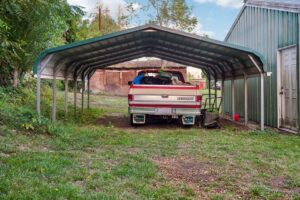
When considering a new structure for your property – be it a carport for your vehicles, a robust garage for tools and toys, a spacious barn for livestock or hay, an RV cover, or a full-scale commercial steel building – durability is paramount. While traditional construction methods have their place, discerning owners are increasingly turning to steel. This isn’t just a trend; it’s a strategic investment in longevity and performance. Steel buildings offer a fundamentally different level of resilience compared to their wood, concrete block, or stick-built counterparts. Let’s delve into the key reasons why steel consistently outperforms traditional garages in the long run.
The foundation of steel’s longevity lies in its core material properties. Steel is an engineered material with a high strength-to-weight ratio, meaning it can bear significant loads without being excessively bulky. This contrasts sharply with wood, which is organic, and concrete block, which relies on mortar integrity.
Consistent Manufacturing and Quality Control
Unlike lumber, which varies naturally in density, grain, and knot content, structural steel is manufactured under stringent factory conditions. This ensures consistent quality, predictable strength, and uniform dimensions. Each beam, column, and panel arrives engineered to precise specifications, reducing on-site variances and structural weaknesses often found in traditional builds. This manufacturing precision means less opportunity for human error in material selection and significantly higher structural integrity overall.
Resistance to Warping, Settling, and Shrinking
Wood naturally absorbs and releases moisture, leading to expansion and contraction – commonly known as warping, twisting, or bowing. Over time, this can compromise the structural integrity of a traditional garage, leading to misaligned doors, cracked drywall, and eventual structural instability. Concrete foundations for traditional garages can also settle unevenly, causing cracks and shifting. Steel, however, is inorganic and impervious to moisture-induced dimensional changes. It doesn’t warp, shrink, or settle, maintaining its original form and structural alignment for decades. This inherent stability prevents many of the long-term maintenance headaches associated with traditional buildings.
If you’re interested in the durability and longevity of steel structures, you might find the article on custom metal garages in Silver Bow County, MT, particularly insightful. It highlights the benefits of choosing metal garages over traditional options, aligning with the reasons why steel buildings tend to last longer. For more information, you can read the article here: Custom Metal Garages Near Silver Bow County, MT.
Unmatched Resistance to Pests, Rot, and Mold
Organic materials like wood are a natural banquet for various destructive elements. Steel, on the other hand, presents an impenetrable barrier.
Termite and Pest Immunity
Termites are a homeowner’s nightmare, capable of causing devastating, unseen damage that can compromise a building’s entire structure. Carpenter ants, rodents, and other pests can also bore into and nest within wooden frames, leading to costly repairs. Steel is completely unappetizing and impenetrable to these creatures. A steel building eradicates the concern of pest infestations compromising the structural integrity of your garage or barn, saving you significant money and stress on pest control and repairs over its lifespan.
Impervious to Rot and Decay
Moisture is the arch-nemesis of wood. Even with treatments, wood will eventually rot and decay, particularly in areas prone to dampness or fluctuating humidity. This process weakens the wood, making it brittle and susceptible to failure. Steel does not rot. While it can rust if untreated and exposed to certain conditions, modern steel buildings are typically galvanized or coated (often with zinc or specialized paints) to provide excellent corrosion resistance, ensuring their structural integrity remains uncompromised for generations, even in harsh climates.
Mold and Mildew Prevention
Moisture combined with organic material creates the perfect breeding ground for mold and mildew. Beyond the aesthetic unpleasantness, mold can cause respiratory problems and compromise indoor air quality. Traditional garages, especially those with inadequate ventilation or water intrusion, are susceptible. Steel is inorganic and does not support mold growth. While mold might grow on dust or debris within a steel building, it won’t infest the structural components themselves, promoting a healthier and more durable environment.
Superior Durability Against Environmental Extremes
Weather is unpredictable, and your building needs to withstand everything Mother Nature throws at it. Steel excels here, offering a level of resilience unmatched by traditional construction.
Exceptional Wind and Snow Load Capacity
This is where engineering truly shines. Steel buildings are designed and certified to specific wind and snow load requirements, often exceeding local building codes for traditional structures. Because steel has such a high strength-to-weight ratio, it can be engineered to resist hurricane-force winds (e.g., 150 mph+) and immense snow depths (e.g., 60 lbs/sq ft+) without bending or collapsing. Traditional wood-framed garages, while robust, can buckle under extreme wind uplift or heavy snow accumulations, leading to catastrophic failure and significant property loss. For owners in hurricane zones, heavy snow regions, or areas prone to tornadoes, a steel building provides an unparalleled level of safety and security.
Fire Resistance and Non-Combustibility
Wood is combustible by nature. While fire codes require certain fire-retardant treatments or drywall enclosures, a traditional wood-framed building can still contribute to the spread of fire. Steel, on the other hand, is non-combustible. It won’t ignite, fuel a fire, or contribute to its spread. While extremely high temperatures can affect steel’s structural integrity, it offers significantly more time for occupants to evacuate and for firefighters to respond, potentially saving not just the building but its valuable contents. This is a crucial safety advantage, particularly for garages storing vehicles, fuels, or workshops with flammable materials.
Seismic Performance
In earthquake-prone regions, the flexibility and ductility of steel make it a superior choice. Steel structures can flex and deform without fracturing, absorbing seismic energy more effectively than rigid, brittle materials like concrete or masonry. This allows steel buildings to withstand ground motion with less damage, offering a higher degree of safety and structural survival during seismic events.
Sure, here is the sentence with the clickable link:
Watch our Expert Metal Carport and Steel Building Installation Videos on YouTube.
Minimal Maintenance and Lower Lifecycle Costs
While the initial investment in a high-quality steel building might sometimes be comparable to or slightly higher than a traditional garage, the long-term savings in maintenance and repairs are substantial.
Reduced Upkeep and Repair Needs
Because steel doesn’t rot, warp, or crack like wood or masonry, the need for routine maintenance like repainting, patching, or pest control is significantly reduced. Modern steel panel finishes are designed for decades of vibrant color retention and weather resistance, often requiring only occasional washing. Traditional buildings, conversely, often demand regular caulking, painting, and inspection for myriad issues, incurring ongoing costs and consuming valuable time.
Longevity and Warranty
Many reputable steel building manufacturers offer warranties extending for 20, 30, or even 50 years on their structural components and exterior finishes. This is a testament to the expected lifespan of these structures. Traditional garages, while well-built, rarely come with such comprehensive, long-term guarantees, reflecting a shorter expected service life before major repairs or replacements become necessary. Investing in a steel building is investing in peace of mind, knowing your structure will stand strong for generations.
If you’re considering the longevity and durability of your garage, you might find it interesting to explore the benefits of steel buildings compared to traditional structures. A related article discusses the advantages of hiring professional services for installation, which can further enhance the lifespan of your steel garage. For more information on finding reliable contractors in your area, check out this link: steel building contractors near you.
Rapid Construction and Future Adaptability
| Reason | Explanation |
|---|---|
| Strength | Steel buildings are stronger and more durable than traditional garages. |
| Resistance to Elements | Steel buildings are more resistant to fire, termites, and other environmental hazards. |
| Low Maintenance | Steel buildings require less maintenance compared to traditional garages. |
| Longevity | Steel buildings have a longer lifespan than traditional garages. |
| Customization | Steel buildings can be easily customized to fit specific needs and preferences. |
| Cost-Effective | Steel buildings offer cost savings over the long term due to their durability. |
| Environmentally Friendly | Steel buildings are recyclable and can be repurposed, making them more sustainable. |
Beyond its inherent strength, steel offers practical advantages in construction timelines and future flexibility that contribute to its long-term value.
Precise Pre-Fabrication and Faster Erection
Steel buildings are largely pre-engineered and pre-fabricated off-site. This means components arrive ready for assembly, similar to a giant, robust erector set. Foundations are poured, and then the structure goes up quickly and efficiently. This significantly reduces on-site labor costs, minimizes construction waste, and shortens the overall project timeline compared to traditional stick-built or masonry construction, which involves more complex, iterative processes on site. A faster build means you can start using your new space sooner, generating revenue or enjoying its benefits without prolonged disruption.
Easy Expansion and Modification
Life, and your needs, change. A major advantage of steel construction is its inherent modularity. Want to expand your garage, add another bay to your barn, or extend your RV cover? Steel buildings are designed for this. Additional bays and extensions can often be seamlessly integrated without compromising the existing structure’s integrity. Internal layouts can also be easily reconfigured, as interior partition walls are non-load-bearing. This flexibility ensures your initial investment remains valuable and adaptable to evolving requirements, a feature often difficult and costly to achieve with traditional, more rigid construction forms.
Engineering Standards and Certification for Peace of Mind
One of the most compelling arguments for steel lies in its rigorous engineering. When you purchase a steel building from a reputable provider, you’re not just buying material; you’re buying a meticulously designed structure.
Detailed Blueprints and Load Calculations
Every quality steel building comes with detailed engineering blueprints. These plans precisely calculate the structural requirements based on your specific location’s climate data, local building codes, and your chosen dimensions. This includes precise snow load ratings (the weight of snow the roof can safely bear) and wind load ratings (the pressure and uplift forces the structure can withstand). This level of upfront engineering significantly reduces the risk of structural failure, ensuring the building is fit for purpose and compliant with all relevant regulations.
Building Code Compliance and Certification
Reputable steel building manufacturers ensure their structures meet or exceed local, regional, and national building codes. Often, these buildings are certified by professional engineers, providing an official stamp of approval that the design and components will perform as specified. This certification is crucial for permitting and insurance purposes and offers property owners immense peace of mind, knowing their investment is sound, safe, and legally compliant. Traditional garages also undergo code inspections, but the inherent predictability and consistency of engineered steel enhance this compliance.
Consistent Performance Across Varied Applications
Whether it’s a small single-car carport, a sprawling agricultural barn, or a commercial warehouse, the underlying engineering principles of steel construction remain consistent. This means the same benefits of strength, durability, and reliability scale across all applications. Ranch owners can expect their steel barn to withstand the elements as robustly as a business owner’s steel workshop. This universal performance is a testament to the material’s versatility and resilience.
Conclusion: A Strategic Investment in Enduring Value
When evaluating your options for a new carport, garage, barn, RV cover, or steel building, the long-term advantages of steel are undeniable. From its intrinsic material strength and immunity to pests and rot to its superior resistance to extreme weather and minimal maintenance requirements, steel consistently offers a longer, more reliable service life than traditional construction methods. For homeowners, ranch owners, business owners, and property owners seeking a durable, low-maintenance, and strategically sound investment, steel buildings represent not just a shelter, but a lasting asset designed to perform for generations.
FAQs
What are the main reasons steel buildings last longer than traditional garages?
Steel buildings last longer than traditional garages due to their durability, resistance to pests and rot, ability to withstand extreme weather conditions, low maintenance requirements, and fire resistance.
How do steel buildings compare to traditional garages in terms of durability?
Steel buildings are more durable than traditional garages because they are resistant to rust, corrosion, and deterioration. They are also less susceptible to damage from pests and rot, making them a longer-lasting option.
What makes steel buildings more resistant to extreme weather conditions compared to traditional garages?
Steel buildings are designed to withstand extreme weather conditions such as high winds, heavy snow loads, and seismic activity. Their sturdy construction and ability to be engineered for specific weather conditions make them more resilient than traditional garages.
What are the maintenance requirements for steel buildings compared to traditional garages?
Steel buildings require less maintenance than traditional garages due to their resistance to rust, corrosion, and pests. They typically only require occasional cleaning and inspection to maintain their longevity.
How do steel buildings compare to traditional garages in terms of fire resistance?
Steel buildings are more fire-resistant than traditional garages because steel does not contribute to the spread of fire. This makes them a safer option for storing valuable items and provides added peace of mind for property owners.