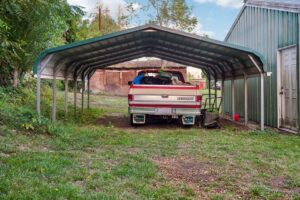
When you’re investing in a metal carport, garage, barn, RV cover, or a comprehensive steel building, you’re looking for durability, protection, and long-term value. You’re likely researching materials, sizes, and aesthetics. But one critical factor that can dramatically impact the safety and longevity of your structure, and potentially your property, is its wind rating.
Have you ever considered what happens if a metal building is not wind rated? It’s a question that echoes from homeowners protecting their vehicles to ranch owners safeguarding their livestock and equipment, and business owners securing their inventory. Ignoring wind rating is akin to building a house without a foundation – it might stand for a while, but under pressure, the consequences can be severe. This article delves into the realities of owning an unrated metal building, helping you make informed decisions.
A wind rating for a metal building isn’t just a marketing buzzword; it’s a technical specification indicating the maximum wind speed the structure is engineered to withstand without sustaining significant damage. This rating is derived from rigorous engineering calculations and often adheres to industry standards and building codes.
The Science Behind the Rating
Metal building components, from framing to roofing and siding, are designed to bear specific loads. Wind load is a critical consideration. When wind encounters a building, it creates both positive pressure (pushing against the structure) and negative pressure (suction, effectively pulling away from it). High winds can also cause uplift, particularly on roof panels.
A wind-rated building has been designed and tested to manage these forces. Certified engineers ensure that the gauge of the steel, the gauge of the panels, the strength of the connections (bolts, screws), and the anchoring system are all sufficient for the specified wind speed.
Why Certification Matters
A truly wind-rated building will often carry certification. This might be from the manufacturer, a third-party engineering firm, or it might be designed to meet specific local building codes, which inherently require wind resistance. Without this certification, you have no guarantee that the building has been engineered to a specific standard, leaving you vulnerable.
If you’re interested in understanding the implications of not having a wind-rated metal building, you may find it helpful to read about the specific installation requirements for custom metal carports in various regions. For instance, the article on custom metal carports near Kane County, UT, provides valuable insights into local regulations and considerations that can affect the durability and safety of metal structures. You can explore this topic further by visiting the article here: Custom Metal Carports Near Kane County, UT.
Consequences of an Unrated Metal Building: A Cascade of Risks
Opting for a metal building without a specified wind rating, often seen in cheaper, DIY kits or uncertified online offerings, is a gamble. The initial cost savings can quickly be dwarfed by the potential expenses and damages that arise when nature unleashes its fury.
Structural Integrity Compromised
The most immediate risk is the building’s structural integrity. An unrated building likely uses lighter gauge steel, weaker connectors, and less robust anchoring. In moderate winds, you might see cosmetic damage like dented panels or loose screws. However, as wind speeds increase, so does the likelihood of catastrophic failure.
- Panel Detachment: Roofing and siding panels can be ripped off, exposing the interior and potentially becoming dangerous projectiles.
- Frame Failure: The supporting framework can buckle, twist, or collapse under sustained wind pressure. This is particularly true if the framing connections are not designed to handle lateral (sideways) forces.
- Foundation Uplift/Failure: Inadequate anchoring means the entire structure can be lifted off its foundation or the foundation itself can be undermined or pulled apart by wind forces.
Property and Asset Damage
The damage isn’t confined to your metal building. If the structure fails, what’s inside is at extreme risk.
- Vehicle Damage: For metal carports and garages, this means your car, truck, RV, or boat can be crushed, dented, or exposed to the elements if the building collapses or its roof is blown off.
- Equipment and Storage Loss: Barns and steel buildings are often used for storing valuable equipment, vehicles, hay, or inventory. A failed structure can lead to the complete loss of these assets.
- Livestock Danger: For ranch owners, a collapsed barn or shelter can tragically endanger livestock, leading to injury or death.
Safety Hazards for People
Beyond property damage, an unrated metal building poses a direct threat to human safety.
- Falling Debris: Detached panels, twisted metal, and collapsing framework can become dangerous projectiles, posing a risk to anyone or anything in close proximity.
- Structural Collapse During Occupancy: If the building is occupied during a wind event (e.g., someone working in a garage or a rancher checking on animals), a sudden structural failure can lead to severe injury or fatality.
Insurance Complications
This is a significant financial blow. Most homeowner’s insurance policies, and certainly commercial property insurance, will have stipulations regarding the structural integrity and compliance with local building codes.
- Voided Claims: If your metal building fails due to high winds, and it’s determined to be unrated or non-compliant with local codes, your insurance company may deny your claim entirely. You’ll be left footing the bill for repairs or replacement.
- Increased Premiums: Even if you manage to get coverage, having a higher-risk structure on your property can lead to increased insurance premiums across your entire policy.
- Building Code Violations: Many areas require permits and inspections for these structures. An unrated building might not meet code, leading to fines or mandatory removal.
Environmental Impact
The debris from a failed metal building can spread for miles, causing damage to neighboring properties and the environment. Cleanup efforts can be extensive and costly.
Crucial Factors to Consider When Buying: Prioritizing Wind Resistance
When you’re in the market for a metal building, your primary focus should be on factors that guarantee it can withstand the elements, especially wind.
Understanding Wind Speed Zones and Local Codes
Local Relevance: Wind speeds vary significantly by geographic location. Coastal areas, plains prone to tornadoes, and mountainous regions all experience different wind profiles. Your local building department is the best resource for understanding the prescribed wind speed requirements for your area.
Building Codes: Most municipalities and counties have adopted building codes that dictate minimum structural requirements, including wind load resistance. These codes are often based on ASCE (American Society of Civil Engineers) standards. A builder who doesn’t know or can’t provide information on local code compliance is a red flag.
Gauge of Steel and Panel Strength
The thickness of the steel used in the framing and panels is paramount.
- Frame Gauge: Typically measured in gauge (a lower number means thicker steel), the framing members (trusses, posts) must be substantial enough to resist bending and buckling. Common gauges might range from 14-gauge to 12-gauge or even heavier for high-wind areas.
- Panel Gauge: The metal panels (roofing and siding) also come in various gauges, usually from 26-gauge to 29-gauge. Thicker panels (lower gauge) offer greater resistance to wind forces and impact.
Framing Systems and Connections
The design of the framing system and, critically, how components are connected, dictates the building’s overall strength.
- Truss Design: Engineered trusses are designed to distribute loads effectively. The spacing of these trusses also plays a role.
- Connection Strength: This is where many budget-built structures fail. Are high-strength bolts used? Are self-tapping screws adequate, or are they prone to stripping and loosening? The connection details are as important as the material itself. Look for buildings with robust bracing and adequately sized fasteners.
Anchoring Systems: The Grounding Force
Even the strongest frame is useless if it’s not securely attached to the ground.
- Anchor Types: Different anchoring methods are used depending on the foundation and soil conditions. These can include rebar anchors, concrete anchors (wedge anchors, expansion anchors), and even ground anchors for buildings not placed on a concrete slab.
- Engineered Anchoring: The anchoring system must be engineered to resist the uplift forces generated by wind. This is not a place to cut corners.
Snow Load Considerations (and their relation to Wind)
While this article focuses on wind, it’s worth noting that snow load is another critical design factor, especially in colder climates. A building designed for heavy snow load will often have more robust framing, which can indirectly enhance its wind resistance. However, a building optimized for snow load might not automatically be rated for high winds, and vice-versa. Always ensure both factors are addressed for your specific climate.
Sure, here is the sentence with the clickable link:
Watch our Expert Metal Carport and Steel Building Installation Videos on YouTube.
Sizing and Pricing Factors: Balancing Needs and Budgets
Sizing: The size of your metal building directly impacts its cost. Larger structures require more material, more complex engineering for wind and snow loads, and more extensive foundation and anchoring. It’s essential to accurately determine your needs to avoid overspending or underspending.
Pricing Factors:
- Gauge of Steel: Thicker steel means higher cost.
- Building Design & Complexity: More complex rooflines, multiple doors, or windows add to the price.
- Wind and Snow Load Rating: Higher ratings require more engineering and stronger materials, increasing costs.
- Foundation Type: A poured concrete slab is more expensive than gravel or minimal concrete footings.
- Installation: Professional installation adds to the overall cost but is often crucial for ensuring proper assembly and structural integrity.
- Delivery: Long-distance delivery can be a significant expense.
- Additional Features: Insulation, interior framing, vents, windows, and doors all add to the final price.
Buyer Guidance:
- Know Your Local Codes: Contact your local building department before you start shopping. Get exact wind and snow load requirements for your address.
- Request Engineering Documentation: Reputable manufacturers will provide engineering stamps or documentation confirming their building meets specific wind load ratings at a minimum.
- Inquire About Materials: Ask about the gauge of steel for both framing and panels.
- Understand Anchoring: Ask detailed questions about the anchoring system and verify it’s appropriate for your site conditions and wind requirements.
- Get Multiple Quotes: Compare not just price but also specifications, warranty, and customer reviews from different reputable suppliers.
- Consider Professional Installation: While DIY is an option, professional installation often ensures the building is erected to its full engineered potential.
Understanding the implications of not having a wind-rated metal building is crucial for ensuring safety and durability, especially in areas prone to severe weather. For those considering the installation of custom metal structures, it is beneficial to explore related topics that discuss the importance of proper building specifications. You can find valuable insights in this article about custom metal buildings near Owyhee County, ID, which highlights how local conditions can influence the design and requirements of metal buildings.
Comparison: Rated vs. Unrated Metal Buildings
| Impact | Consequence |
|---|---|
| Structural Damage | Increased risk of collapse or failure during high winds |
| Legal Issues | Non-compliance with building codes and regulations |
| Insurance Problems | Difficulty obtaining insurance or higher premiums |
| Safety Concerns | Risk to occupants and nearby properties |
| Feature | Wind-Rated Metal Building | Unrated Metal Building |
| :- | : | : |
| Engineering | Professionally engineered for specific wind speeds. | May use generic designs; no specific wind load validation. |
| Materials | Specified gauges of steel, robust connectors. | Often lighter gauge steel, weaker fasteners. |
| Anchoring | Engineered system designed for uplift and lateral forces. | Basic or generic anchoring; may not withstand high winds. |
| Certification | Often stamped by engineers or meets specific codes. | Lacks certification or code compliance assurance. |
| Insurance | Generally accepted for claims; easier compliance. | Claim denial possible; may void policy. |
| Long-Term Durability | High resistance to wind damage, greater longevity. | Vulnerable to wind damage, shorter lifespan. |
| Safety | Higher safety margin for structural failure. | Increased risk of collapse and hazards. |
| Cost | Higher initial investment. | Lower initial investment. |
| Peace of Mind | Significant; knowing your investment is protected. | Minimal; constant worry during storms. |
If you’re considering the implications of a metal building that is not wind rated, it’s essential to understand the potential risks involved, such as structural damage during severe weather events. For more information on how to choose the right metal structures for your area, you might find this article helpful, which discusses various options for metal carports near Bannock County, Idaho. You can read it here: metal carports near Bannock County, Idaho. This resource can provide insights into selecting buildings that meet local wind rating requirements, ensuring your investment is safe and durable.
FAQs: Quick Answers to Common Concerns
Q: What is the standard wind rating for most metal buildings?
A: There isn’t one “standard.” Wind ratings vary widely, from 90 mph up to 150 mph or even higher for engineered structures. The requirement depends entirely on your local building codes and geographic location.
Q: Can I upgrade an unrated metal building to a higher wind rating?
A: It’s challenging and often not cost-effective. Upgrading typically requires a complete engineering analysis, potentially new framing members, reinforced connections, and upgraded anchoring. It’s usually more practical to invest in a properly rated building from the start.
Q: How do I find out the wind speed requirements for my area?
A: Contact your local city or county building department. They can provide you with the required wind load and snow load requirements for your specific address.
Q: Will my homeowner’s insurance cover damage from wind if my building isn’t rated?
A: It’s highly unlikely. Insurance policies typically require structures to be built to code. If a structure fails due to an unsurvivable wind speed for its design, or if it was never engineered for wind resistance, claims will likely be denied.
Q: What is the difference between a “carport” and a “garage” in terms of wind rating?
A: Carports are typically open on at least three sides, offering less surface area for wind to act upon but also less protection. Garages are enclosed and therefore require more robust engineering to withstand wind pressure from all sides. RV covers, barns, and full steel buildings follow similar engineering principles based on their enclosed nature.
Conclusion: Invest Wisely for Lasting Protection
The decision to purchase a metal carport, garage, barn, RV cover, or steel building is a significant one. While the allure of a lower price tag for an unrated building might be tempting, the potential consequences are far too severe to ignore. A wind-rated metal building, properly engineered and installed, is not just an investment in a structure; it’s an investment in protection for your vehicles, equipment, property, and loved ones. Prioritize certifications, understand your local requirements, and never compromise on the engineering that safeguards your investment against the unpredictable power of the wind. Your diligence now will pay dividends in peace of mind and assured durability for years to come.
FAQs
What is wind rating for metal buildings?
Wind rating for metal buildings refers to the ability of the structure to withstand the force of wind. It is typically measured in pounds per square foot (PSF) and is determined based on the location and specific environmental factors.
What happens if a metal building is not wind rated?
If a metal building is not wind rated, it may be more susceptible to damage or failure during high wind events such as storms or hurricanes. This can result in structural damage, collapse, and potential safety hazards for occupants.
Can a metal building be retrofitted for wind rating?
Yes, a metal building can be retrofitted for wind rating by reinforcing the structure with additional bracing, anchors, and other components to improve its ability to withstand wind forces. It is important to consult with a structural engineer or building professional for proper retrofitting.
Are there building codes or regulations for wind rating?
Yes, there are building codes and regulations that specify wind rating requirements for metal buildings in different regions. These codes are designed to ensure the safety and structural integrity of buildings in the event of high winds.
How can I determine the wind rating for a metal building?
The wind rating for a metal building can be determined by consulting with a structural engineer or building professional who can assess the specific location, environmental factors, and building design to calculate the appropriate wind rating.