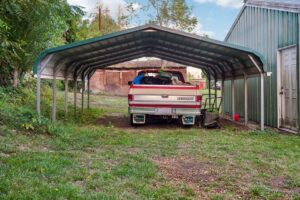
When you’re investing in a metal building—whether it’s a garage, shop, RV cover, or residential structure—one of the most important (and often misunderstood) terms you’ll encounter is Risk Category II certification.
This isn’t just a technical checkbox. It directly impacts how your building is engineered, how it performs in extreme weather, and whether it meets local building code requirements.
If you’re planning to use your structure for human occupancy, residential storage, or anything tied to a dwelling, Risk Category II (Risk 2) is typically required—and for good reason.
What Is Risk Category II Certification?
Risk Category II is defined by the American Society of Civil Engineers (ASCE) in their structural design standard, commonly referred to as ASCE 7.
In simple terms:
- Risk Category I → Low risk (agricultural buildings, storage sheds with no human occupancy)
- Risk Category II → Standard occupancy (homes, garages, workshops, carports attached to residential use)
Risk 2 buildings must meet higher structural reliability standards because failure could pose a risk to people.
As the Federal Emergency Management Agency emphasizes, structures designed for human use must be engineered to withstand region-specific hazards like wind uplift, snow loads, and seismic forces.
What Changes in a Risk 2 Certified Metal Building?
When you upgrade to a Risk Category II certified building, you’re not just paying for a label—you’re getting a fundamentally stronger, code-compliant structure.
Here’s what actually changes:
1. Extra Bracing for Structural Stability
Risk 2 buildings include additional bracing systems (typically cable or rigid bracing) to:
- Resist lateral wind loads
- Prevent racking or twisting
- Improve overall frame rigidity
These systems are engineered specifically for your wind exposure category and geographic location.
2. Closer Truss Spacing and Heavier Framing
One of the biggest upgrades is in the structural skeleton:
- Trusses are spaced closer together
- Larger or thicker gauge steel is used
- Purlins and girts are upgraded
This increases the building’s ability to handle:
- Snow loads (critical in Utah, Idaho, Wyoming, Montana)
- Wind uplift and lateral pressure
3. Enhanced Anchoring Systems
Anchoring is one of the most critical—and most overlooked—components.
Risk 2 certification requires:
- Engineered anchoring plans
- Larger or more frequent anchors
- Site-specific anchoring based on soil conditions
Options typically include:
- Concrete wedge anchors
- Mobile home anchors
- Helical (helix) anchors
Improper anchoring is one of the top causes of failure in non-certified structures.
4. Wet-Stamped, Site-Specific Engineered Drawings
This is non-negotiable for Risk 2.
Every certified building must include:
- Site-specific engineering calculations
- Load analysis (wind, snow, exposure category)
- Foundation and anchoring requirements
- Wet-stamped drawings by a licensed engineer
These documents are required by most local building departments for permitting.
According to guidance aligned with International Code Council standards, site-specific engineering ensures the structure is designed for exact local conditions—not generic assumptions.
5. Increased Warranty Coverage
Because Risk 2 buildings are engineered to a higher standard, they often come with:
- Stronger structural warranties
- Higher confidence in long-term durability
- Reduced risk of failure or costly repairs
This isn’t just a perk—it reflects the lower probability of structural issues when built correctly.
Why Risk 2 Certification Matters (Especially in the Western U.S.)
If you’re building in Utah, Idaho, Wyoming, or Montana, Risk 2 isn’t optional in most cases—it’s expected.
These regions present:
- Heavy snow loads
- High wind exposure
- Rapid weather changes
A non-certified structure may:
- Fail inspection
- Be denied permits
- Experience structural issues over time
Expert Insight: What Professionals Say
Mike Daniels, owner of Metal Carports and Buildings, puts it plainly:
“Most people don’t realize the difference until it’s too late. A Risk 2 certified building isn’t just stronger—it’s engineered for your exact property. That means better performance, fewer problems, and peace of mind when the weather hits.”
From an engineering perspective, standards from organizations like ASCE emphasize that:
“Structural systems must be designed with appropriate risk categories to ensure reliability proportional to occupancy and hazard exposure.”
Common Misconception: “All Metal Buildings Are the Same”
They’re not.
A non-certified or Risk 1 structure may look identical from the outside—but internally:
- It may lack proper bracing
- It may have wider truss spacing
- It may not meet local load requirements
This is where many buyers get caught off guard.
When Do You Need Risk 2?
You should strongly consider (or will likely be required to have) Risk 2 if:
- The building is used for a garage, shop, or home storage
- It’s near or attached to a residence
- You’re pulling a building permit
- You live in a snow or wind load zone
Final Takeaway
Risk Category II certification is not an upsell—it’s a structural necessity for most residential and human-occupied metal buildings.
It ensures:
- Code compliance
- Structural integrity
- Long-term durability
- Safety for occupants
Cutting corners here is one of the most expensive mistakes you can make.
Get a Risk 2 Certified Building (Done Right)
At Metal Carports and Buildings, we design, engineer, deliver, and professionally install Risk Category II certified metal buildings tailored to your exact location.
✔ Engineered and certified for your specific snow load and wind load
✔ Wet-stamped, site-specific engineered drawings included
✔ Expert installation from start to finish
✔ Built for Utah, Idaho, Wyoming, Montana, Washington, and Oregon
As Mike Daniels says:
“If you’re going to invest in a building, build it once and build it right. That starts with proper engineering.”
👉 Get a free, no-obligation quote today
📞 Call or Text Mike at 435-250-4446
🌐 Visit: Metal Carports and Buildings