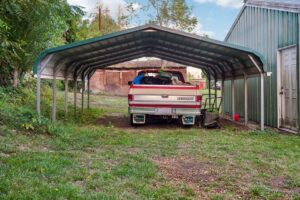
Thinking about a new garage, barn, or workshop? You’re probably weighing your options: metal versus wood. It’s a common dilemma for homeowners, ranchers, RV owners, and property owners across the Mountain West and Texas. Here at MetalCarportsandBuildings.com, we help people like you make informed decisions every day. Our owner, Mike Daniels, has seen firsthand how a well-chosen structure can transform a property. Let’s dig into a key question: are metal buildings cheaper than wood buildings in Utah, Idaho, Wyoming, Montana, Colorado, and Texas?
The short answer is often yes, particularly when you factor in long-term costs and regional specifics. While the initial sticker price can sometimes be competitive for smaller structures, metal buildings typically offer significant savings over wood throughout their lifespan. This is especially true in states like Utah, Idaho, Wyoming, Montana, Colorado, and Texas, where extreme weather conditions and specific construction requirements play a major role.
Initial Material Costs: Metal vs. Wood
When you first look at raw material costs, lumber prices can fluctuate wildly. “We’ve seen lumber prices spike dramatically in recent years,” notes Mike Daniels. “Steel prices are more stable and predictable, which helps us provide more consistent pricing for our customers.” For smaller sheds, wood might appear slightly cheaper upfront, but for larger garages, barns, or commercial-sized workshops, the material cost advantage quickly shifts to metal. Steel framing requires less material for the same structural integrity compared to wood, leading to lower material bills.
Labor Costs: The Efficiency of Prefabrication
This is where metal truly shines. Most metal buildings arrive as pre-engineered kits. This means components are cut and drilled off-site, making assembly much faster. “Our installation teams can erect a substantial metal building in a fraction of the time it would take to frame a comparable wood structure,” explains Mike. Less labor time directly translates to lower labor costs for you. Wood construction, especially for larger structures, involves more on-site cutting, framing, and skilled carpentry, driving up labor expenses significantly.
When considering the cost-effectiveness of metal buildings compared to wood structures in states like Utah, Idaho, Wyoming, Montana, Colorado, and Texas, it’s essential to explore various factors that influence pricing and durability. A related article that delves into the specifics of metal barn installations in Carbon County, Montana, can provide valuable insights into the advantages of metal construction in rural areas. For more information, you can read the article here: Metal Barns in Carbon County, Montana.
Long-Term Savings: Where Metal Really Pulls Ahead
The initial purchase price is just one piece of the puzzle. The true cost of ownership becomes clear when you consider durability, maintenance, and insurance over the decades.
Durability and Longevity: Built to Last
Metal buildings are renowned for their strength and resistance to elements that plague wood.
- Pests: Termites, carpenter ants, and rodents are a constant threat to wood structures. Metal buildings are impervious to these pests.
- Rot and Decay: Moisture is wood’s enemy. Metal doesn’t rot, warp, or mold. This is particularly important in areas with varying humidity or heavy snowfall, like the mountainous regions of Utah, Idaho, Wyoming, Montana, and Colorado.
- Fire Resistance: Steel is non-combustible, offering a significant advantage in fire-prone areas or for storing flammable materials. This can often lead to lower insurance premiums.
- Weather Resistance: Modern metal buildings, specifically engineered for regional conditions, stand up exceptionally well to high winds, heavy snow loads, and hail, common across our service area.
Maintenance Costs: A Clear Winner
Wood buildings require ongoing maintenance: painting, staining, sealing, and repairs due to rot or pest damage. These costs add up over the years. Metal buildings, conversely, are incredibly low-maintenance.
- No Painting Required: The exterior panels come with durable, factory-applied finishes that retain their color and integrity for decades, often backed by long warranties.
- Minimal Repairs: Aside from potential impact damage, major repairs are rare.
- Longevity: A well-maintained metal building can easily last 50 years or more, often outliving wood structures that require more frequent intervention.
Insurance Premiums: An Overlooked Saving
Because of their superior fire resistance and structural integrity against severe weather, many insurance companies offer lower premiums for metal buildings compared to wood. Always check with your insurance provider, but this can be a significant hidden saving over the long haul.
Regional Considerations: Snow, Wind, and Permits
When buying a metal building, understanding local conditions and regulations is paramount. This is where our expertise at MetalCarportsandBuildings.com truly benefits you.
Snow Loads: Essential for Mountain States
Utah, Idaho, Wyoming, Montana, and Colorado experience significant snowfall. Ignoring snow load requirements is not only risky but illegal. “We frequently see customers trying to save a few dollars by opting for a lighter gauge steel or a less robust frame,” warns Mike Daniels. “That’s a false economy. A collapsed roof from heavy snow is far more expensive than building it right the first time.” All our buildings are engineered to meet or exceed local snow load requirements, ensuring your structure can safely withstand the heaviest winters. Our building styles and roof styles, especially A-frame vertical and regular roof designs, are optimized for snow shedding.
Wind Loads: Crucial for Texas and Exposed Areas
From the open plains of Texas to exposed ranchlands in Wyoming, high winds are a fact of life. Our metal buildings are designed to withstand specific wind speed ratings relevant to your exact location. This includes robust anchoring systems and proper bracing. Ignoring wind load can lead to catastrophic structural failure. Our engineers calculate the exact specifications needed for your area, ensuring your investment is secure.
Permits and Certifications: Navigating Local Regulations
Permits are not optional; they’re a legal necessity in most jurisdictions for any substantial structure.
- Certified Buildings: Many regions, especially for larger structures and those requiring specific snow/wind loads, will require an engineer-certified building. This means the building’s design has been reviewed and approved by a licensed engineer, confirming it meets local building codes. We provide certified buildings that come with a set of stamped engineering plans necessary for obtaining permits.
- Permit Acquisition: While we don’t pull permits for you, we provide all the necessary documentation to make the process as smooth as possible. “It’s vital for customers to contact their local planning department early in the process,” advises Mike. “Permit requirements vary greatly even within the same county.” Check https://metalcarportsandbuildings.com/resources/ for general guidance, but always confirm with your local authority.
Setup a free consultation!
Sizing, Design, and Installation: Tailoring Your Metal Building
Choosing the right structure involves more than just price; it’s about functionality and fit for your property.
Sizing Your Structure: From Sheds to Aircraft Hangars
Whether you need a compact 12×20 shed for garden tools, a 24×30 two-car garage, a massive 40×60 workshop, or an 18×40 RV cover, we can customize a solution. Consider what you’ll store, how much space you need for maneuvering, and any future expansion plans. Our design tool at https://metalcarportsandbuildings.com/design/ allows you to visualize and customize various options.
Roof Styles and Aesthetics: More Than Just Functional
Metal buildings have come a long way aesthetically. Our building styles range from the economical regular style carport to the extremely durable and aesthetically pleasing A-frame vertical roof.
- Regular Roof: Economical, rounded edges, ideal for areas with light snow/wind.
- Boxed Eave Roof (A-Frame Horizontal): A-frame appearance, but panels run horizontally. Good for moderate weather.
- Vertical Roof (A-Frame Vertical): Our strongest and most recommended option, especially for heavy snow or rain. Panels run vertically, shedding snow and water efficiently. Most durable and visually appealing.
We offer a wide range of color options to blend seamlessly with your existing property. See examples of our building styles at https://metalcarportsandbuildings.com/building-styles/.
Anchoring and Foundation: Securing Your Investment
Proper anchoring is critical for stability, especially with high wind loads.
- Concrete Anchors: For concrete foundations or slabs. Strong and permanent.
- Rebar Anchors: Used for asphalt foundations.
- Auger Anchors: Designed for ground/dirt anchoring. Essential for securing buildings in unpaved areas.
- Mobile Home Anchors: For areas with extreme wind load requirements, providing maximum ground anchoring.
“Never skimp on anchoring,” says Mike Daniels. “It’s what keeps your building standing during a severe storm.” While we offer installation, preparing a level site and foundation is typically the customer’s responsibility. This includes concrete slabs, gravel pads, or compacted dirt. Consult your building plans for specific foundation requirements.
When considering the cost-effectiveness of construction materials, many people wonder if metal buildings are cheaper than wood buildings in states like Utah, Idaho, Wyoming, Montana, Colorado, and Texas. A related article discusses the benefits of steel structures and how they can provide long-term savings and durability. For more insights on this topic, you can read about the advantages of steel shed installation in Keizer, Oregon, which highlights the efficiency and affordability of metal buildings. To explore this further, visit this article.
Pricing and Value: Getting the Most for Your Dollar
| State | Metal Building Cost | Wood Building Cost | Price Difference |
|---|---|---|---|
| Utah | 10,000 | 12,000 | Metal buildings are 2,000 cheaper |
| Idaho | 9,500 | 11,500 | Metal buildings are 2,000 cheaper |
| Wyoming | 10,200 | 12,300 | Metal buildings are 2,100 cheaper |
| Montana | 9,800 | 11,700 | Metal buildings are 1,900 cheaper |
| Colorado | 10,500 | 12,600 | Metal buildings are 2,100 cheaper |
| Texas | 11,000 | 13,200 | Metal buildings are 2,200 cheaper |
When you compare metal building prices to wood buildings, especially across Utah, Idaho, Wyoming, Montana, Colorado, and Texas, metal often offers superior value.
What Impacts Pricing?
- Size: Larger buildings naturally cost more.
- Gauge of Steel: Thicker steel (lower gauge numbers) costs more but offers greater strength.
- Certification: Certified buildings suitable for specific snow/wind loads will be priced higher due to engineering.
- Roof Style: Vertical roofs are generally more expensive due to added structural components.
- Panel Options: Enclosed sides, end walls, doors, windows, and insulation add to the cost.
- Delivery and Installation: Included in most of our prices, but accessibility to your site can sometimes affect final costs.
- Customization: Specific bay sizes, openings, and lean-tos will influence the final price.
No Hidden Fees, Just Transparent Pricing
At MetalCarportsandBuildings.com, we believe in transparent pricing. We empower you to design your building online and get an instant quote or speak with our experts to finalize your ideal structure. We serve a broad area, from the deserts of Utah to the plains of Texas and the Rocky Mountains. Check our service area at https://metalcarportsandbuildings.com/service-area/.
When considering the cost-effectiveness of metal buildings compared to wood structures in states like Utah, Idaho, Wyoming, Montana, Colorado, and Texas, it’s essential to explore various factors that influence pricing and durability. A related article discusses the benefits of metal building installation and how it can be a practical choice for many homeowners and businesses in these regions. For more insights, you can read about the advantages of metal construction in this informative piece.
FAQs
Q: Do I need a concrete slab for my metal building?
A: Not always. While a concrete slab offers the best foundation, buildings can often be installed on compacted gravel or even level ground with appropriate anchoring. However, a slab is generally recommended for enclosed buildings and heavy use.
Q: How long does it take to install a metal building?
A: Installation times vary by size and complexity, but most standard carports and garages can be installed in a single day. Larger structures may take a few days.
Q: Are your buildings insulated?
A: Insulation is an available option. We offer various types of insulation (e.g., radiant barrier, bubble insulation) to help regulate internal temperatures, crucial for workshops or heated spaces.
Q: What if my land isn’t perfectly level?
A: Your site must be level within 3 inches. Significant leveling is the homeowner’s responsibility prior to installation. Uneven sites can lead to installation delays or additional fees.
Q: Can I customize my metal building’s doors and windows?
A: Absolutely! We offer various rollup doors, walk-in doors, and window options to meet your specific needs. Our design tool on https://metalcarportsandbuildings.com/design/ lets you explore these choices.
The Smart Choice for Your Property
For homeowners, ranchers, RV owners, and property owners in Utah, Idaho, Wyoming, Montana, Colorado, and Texas, metal buildings often represent a superior, more cost-effective choice than wood. From their initial affordability and faster construction to their unparalleled durability, low maintenance, and excellent resistance to extreme weather, metal structures offer far greater long-term value.
Ready to explore the possibilities for your property? Design your dream structure online, or contact our expert team today!
Get started with a free, no-obligation quote today! Call us at (435) 250-4446 or visit metalcarportsandbuildings.com to bring your vision to life.
FAQs
1. Are metal buildings generally cheaper than wood buildings in Utah, Idaho, Wyoming, Montana, Colorado, and Texas?
Metal buildings are often cheaper than wood buildings in these states due to lower material and labor costs, as well as faster construction times.
2. What are some factors that contribute to the cost-effectiveness of metal buildings in these states?
Metal buildings are cost-effective due to their durability, low maintenance requirements, and energy efficiency, which can result in long-term savings.
3. Are there any specific regulations or building codes in these states that may affect the cost of metal buildings compared to wood buildings?
Each state may have specific building codes and regulations that can impact the cost of constructing metal buildings compared to wood buildings. It’s important to consult with local authorities and professionals to understand these factors.
4. What are some potential drawbacks of choosing metal buildings over wood buildings in these states?
While metal buildings may be cheaper upfront, they may have limitations in terms of design flexibility and insulation compared to wood buildings. Additionally, some people may prefer the aesthetic of wood buildings.
5. Are there any specific considerations to keep in mind when deciding between metal and wood buildings in these states?
When deciding between metal and wood buildings, it’s important to consider factors such as the intended use of the building, local climate conditions, long-term maintenance costs, and personal preferences in terms of aesthetics and design.